

You’ve found the tour times and the price. What the listings don’t tell you is what actually happens once you’re inside, or whether the overnight option is a genuinely unusual experience or something you’ll regret booking after a long day of travel.
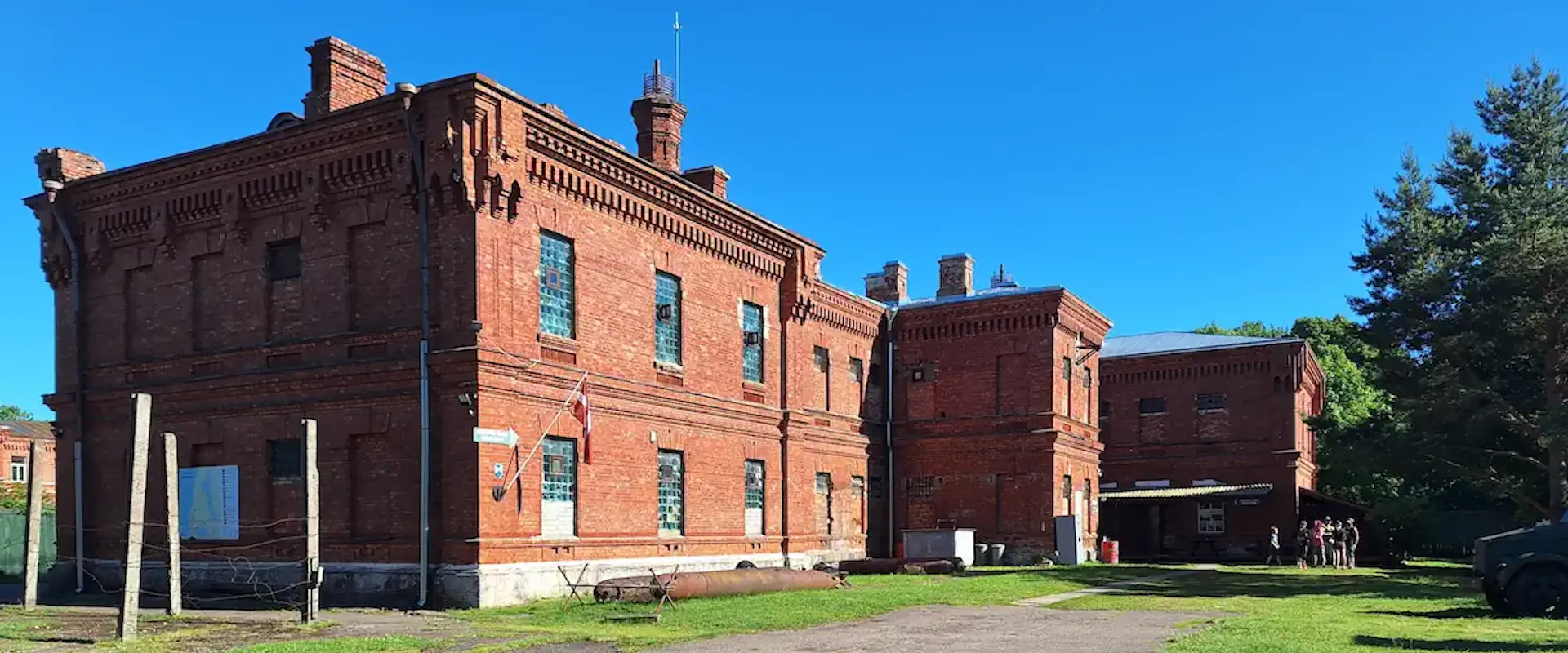
Karosta Prison (Karostas Cietums) is the only military prison in Europe still open to the public. It runs two very different products under one roof: a straightforward 45-minute history tour, and a full overnight “prisoner experience” with guards, rations, and a locked cell. Online reviews blur the two together, and pricing sources disagree.
This guide separates what you’re actually booking, what it costs right now, and who it suits.
Quick facts
- Location: Invalīdu iela 4, Karosta, Liepāja
- Distance from centre: ~5km north of Liepāja Old Town
- Time needed: 45 minutes for the standard tour; overnight option available
- Best for: Soviet-era history, dark tourism, unusual overnight experiences
- Not ideal if: Travelling with young children, claustrophobic, or expecting a polished museum
- Entry: Adults €8, students €5, pupils/seniors €3.50, under 6 free
- Getting there: See the full Karosta transport guide — bus, taxi, or car from the centre
- Book in advance: Groups of 10+, and the overnight stay
Karosta Prison history
Karosta Prison was built around 1900 as an infirmary for the Russian imperial naval base at Liepāja, then converted into a disciplinary prison for sailors and non-commissioned officers. It held Latvian revolutionaries after the 1905 uprising, detainees under Nazi occupation during WWII, and Soviet military prisoners through the Cold War, with the last inmate held here in 1997.
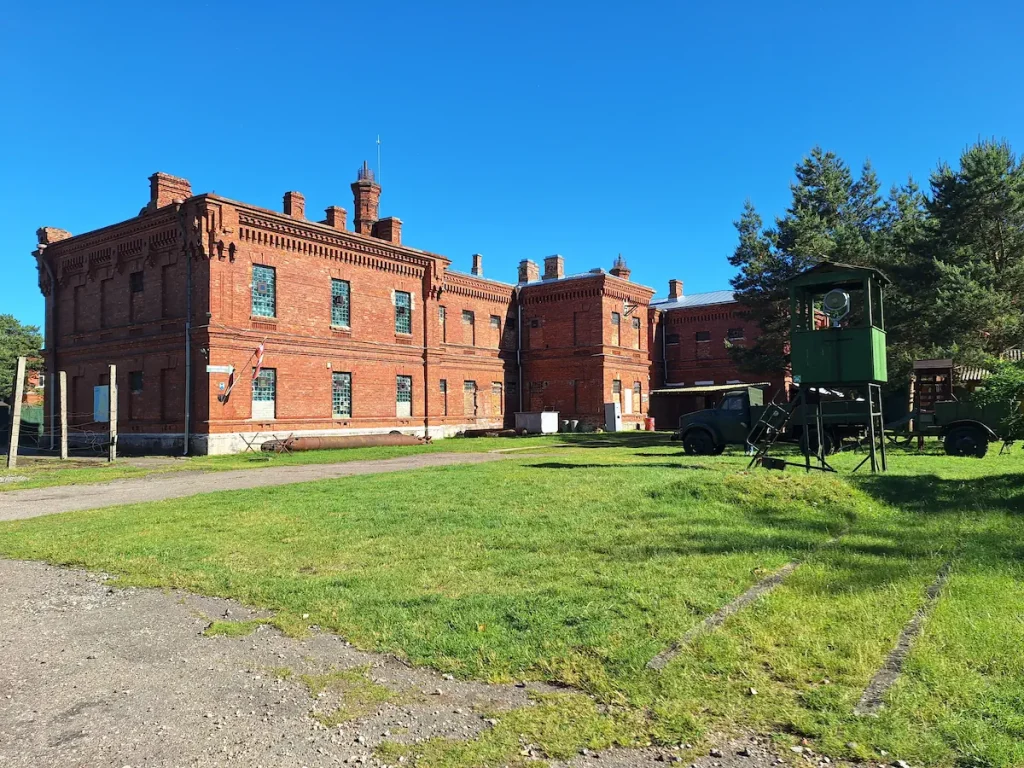
That’s a century of continuous use under four different regimes — Tsarist Russia, independent Latvia, Nazi Germany, and the Soviet Union — which is part of what makes the building unusual. Most Soviet-era military sites in the region were abandoned outright. This one kept functioning as a working prison right up until 1997, so the cells, the graffiti, and the layout are original, not a reconstruction.
Roughly the timeline:
- ~1900 — built as a naval infirmary
- 1905 — holds sailors involved in the Russian Revolution of 1905
- WWII — used as a Nazi detention and interrogation site during the German occupation
- Cold War — Soviet Baltic Fleet disciplinary prison, KGB-linked
- 1997 — last prisoner released; prison closes
- Today — run as a museum and visitor experience by Karostas Glābšanas Biedrība (the Karosta Rescue Society), a local nonprofit
That last point is worth knowing before you book: this isn’t a commercial attraction franchise. The nonprofit that runs it puts revenue back into restoring Karosta’s other military-heritage buildings, which is also why the site still feels rough around the edges rather than polished for tourists.
How to visit: tours, hours, and current prices
Karosta Prison can only be visited on a guided tour. Tours run about 45 minutes and start on the hour throughout opening times. Adult tickets cost €8, students €5, pupils and seniors €3.50, and children under 6 go free. Hours shrink significantly outside summer, so check the season before you plan around it.
| Period | Opening hours | Tour start times |
|---|---|---|
| June – August | 9:00 – 19:00, daily | Every hour, 9:00 – 18:00 |
| May, September | 10:00 – 18:00, daily | Every hour, 10:00 – 17:00 |
| April, October – December | 12:00 – 17:00, daily | Every hour, 12:00 – 16:00 |
| February – March | Weekends only, 12:00 – 17:00 | Every hour, 12:00 – 16:00 |
| January | Weekdays, by prior booking only | Book ahead |
Individual visitors don’t need to book — just turn up before the next tour on the hour. Groups of 10 or more must reserve by phone. Tours run in Latvian, English, and Russian as standard; German and French are available on request if you ask when booking.
It worth booking ahead in July and August, when tours can run close to capacity.
The overnight prison stay: what actually happens
Beyond the standard tour, Karosta Prison runs a genuine overnight “prisoner experience.” You sleep in a cell, eat prison rations, and go through mock interrogations and bed checks from guards in period uniform. You sign a consent waiver first, and the experience isn’t available to children.
It’s worth understanding this as a ladder, not a single product — each level adds intensity and cost:
- Standard tour — 45 minutes, guided, no roleplay, included in the base ticket price
- “Behind the Bars” reality show — a short interactive add-on with actors playing guards
- Escape Room — a separate timed puzzle experience set within the prison
- Overnight “Extreme Night” — full immersion: uniform, cell, rations, interrogation, bed checks, one night — prices range from €30 to €60/night, depending on cell size and number of “prisoners”.
One detail nobody else explains clearly: at the end of the standard tour, the guide may “charge” you for admission on the way out rather than the way in. It’s a small piece of theatre that’s stayed consistent since the site started running tours, and a good indicator of the tone you’re signing up for if you book the overnight version.
Book well ahead in summer — there are a limited number of cells.
Is the “prisoner experience” in bad taste?
Karosta Prison’s theatrical prisoner experience has drawn genuine criticism from dark-tourism writers, who question whether play-acting historical suffering for paying guests is appropriate commemoration or exploitative theatre dressed up as history. It’s a fair question, and worth sitting with before you book the overnight option specifically.
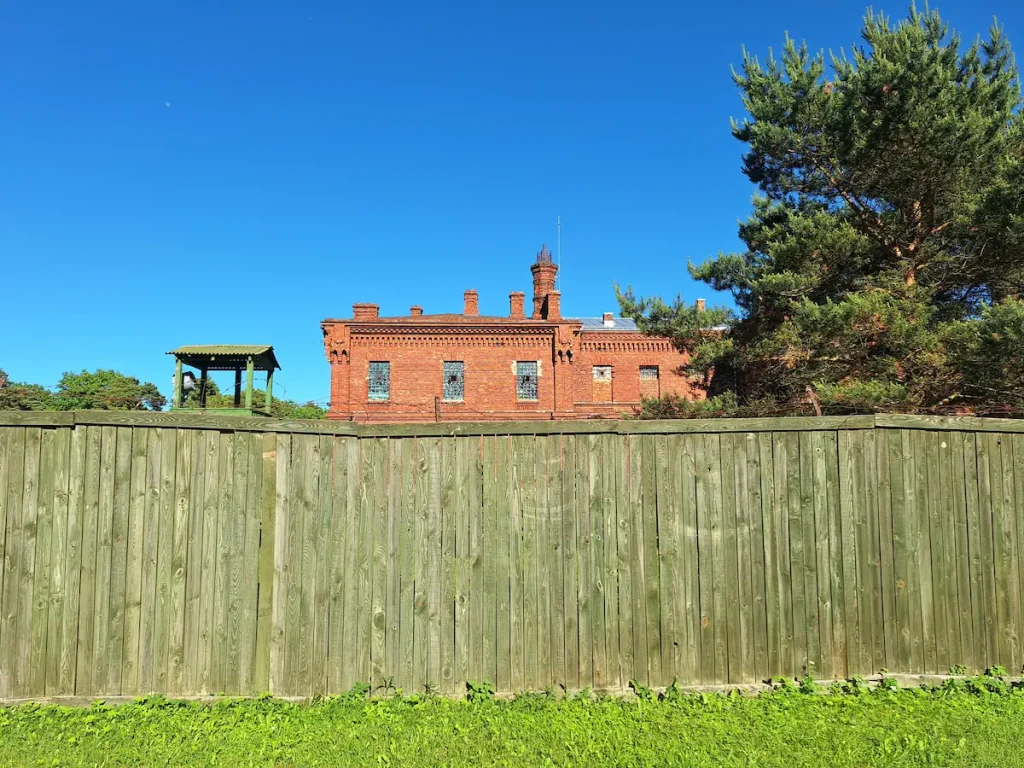
The strongest version of that criticism: turning a site where people were genuinely imprisoned, interrogated, and in some cases killed into an “extreme night” package for tourists risks trivialising what happened here.
One well-known dark-tourism reviewer visited off-season specifically to take the plain historical tour and deliberately skipped the theatrical version, on the grounds that mock abuse as entertainment sat uneasily with him even as an experienced visitor to sites like this.
The counterpoint is straightforward: nobody is compelled to do the overnight package. It’s opt-in, disclosed in advance, and guests sign a waiver before starting. The standard 45-minute tour remains a serious, low-key historical experience with no roleplay at all, and it’s the version most visitors actually take. If the ethics of the overnight product don’t sit right with you, the tour on its own still delivers the history without the theatre.
There isn’t a clean answer here, and this guide isn’t going to pretend there is one. If you’re uneasy about the overnight format specifically, take the tour and skip the rest — you’ll still see the original cells, the graffiti, and the museum collection.
Is Karosta Prison worth it? Who should go
Karosta Prison is worth visiting if you’re interested in Soviet-era history, dark tourism, or unusual overnight experiences — the standard tour is genuinely one-of-a-kind and inexpensive even on its own. It’s not a good fit for young children, anyone claustrophobic or sensitive to mock intimidation, or travellers expecting a polished, sanitised museum experience.
A few things worth knowing before you decide which version to book:
- Families: the standard tour is fine for older children with an interest in history; the overnight stay explicitly excludes children and isn’t suitable for younger visitors regardless of the official policy.
- Claustrophobia and low light: the cell block is genuinely dark and cramped in places. If you’re sensitive to enclosed spaces, stick to the standard tour and skip the overnight option.
- Language: tours run in English as standard, but not every guard staffing the theatrical experiences is fully fluent — some visitors, particularly Americans, are surprised by how direct and confrontational the “abuse” from guards can feel even when intended as performance.
- Expectations: if you’ve visited a well-funded prison museum like Kilmainham Gaol or Alcatraz, recalibrate — Karosta is smaller, rougher, and run on a nonprofit budget. That’s part of its character, not a shortfall.
Getting to Karosta Prison
Karosta Prison sits at Invalīdu iela 4, roughly 5km north of central Liepāja. For bus routes, driving directions, and cycling options from the city centre, see the full Karosta getting-around guide, which covers transport for the whole district in one place rather than repeating it here.
Worth knowing if you’re planning further ahead: interest in Karosta is only going to grow as Liepāja’s year as European Capital of Culture in 2027 draws more visitors north of the city centre, so booking ahead in summer is likely to matter more, not less, in the next couple of years.
Frequently asked questions
What is Karosta Prison?
Karosta Prison is a former military prison in the Karosta district of Liepāja, Latvia, built around 1900 and used as a disciplinary jail by Tsarist, Nazi, and Soviet forces until 1997. It’s now run as a guided-tour museum and overnight visitor experience by a local heritage nonprofit.
How much does it cost to visit Karosta Prison?
The standard 45-minute guided tour costs €8 for adults, €5 for students, and €3.50 for pupils and seniors, with children under 6 free. These prices should be confirmed directly with Karosta Prison before your visit, as listed pricing can lag.
What are Karosta Prison’s opening hours?
Hours vary by season: 9am–7pm daily in June–August, 10am–6pm in May and September, and much shorter, weekend-only hours from November through March. Tours start on the hour throughout opening times, so arrive a few minutes early.
Is Karosta Prison suitable for children?
The standard tour is suitable for older children with an interest in history, though the subject matter is genuinely dark. The overnight “prisoner experience” explicitly excludes children and is not recommended for younger visitors under any circumstances.
Can you stay overnight at Karosta Prison, and what happens?
Yes — guests can book an “Extreme Night” package that includes sleeping in a locked cell, eating prison rations, and mock interrogations from guards in period uniform. A consent waiver is required beforehand, and current pricing should be confirmed directly with Karosta Prison.
Is Karosta Prison’s “prisoner experience” ethical?
It’s genuinely debated. Critics argue that theatrical roleplay at a site of real historical suffering risks trivialising it; supporters point out the experience is voluntary, disclosed in advance, and separate from the plain historical tour. Visitors uneasy about the overnight package can take the standard tour without any roleplay at all.