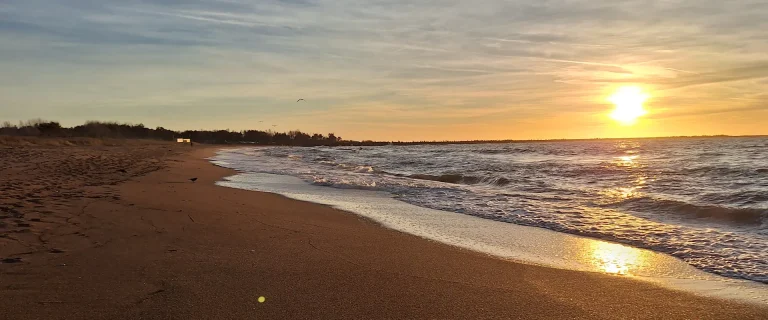
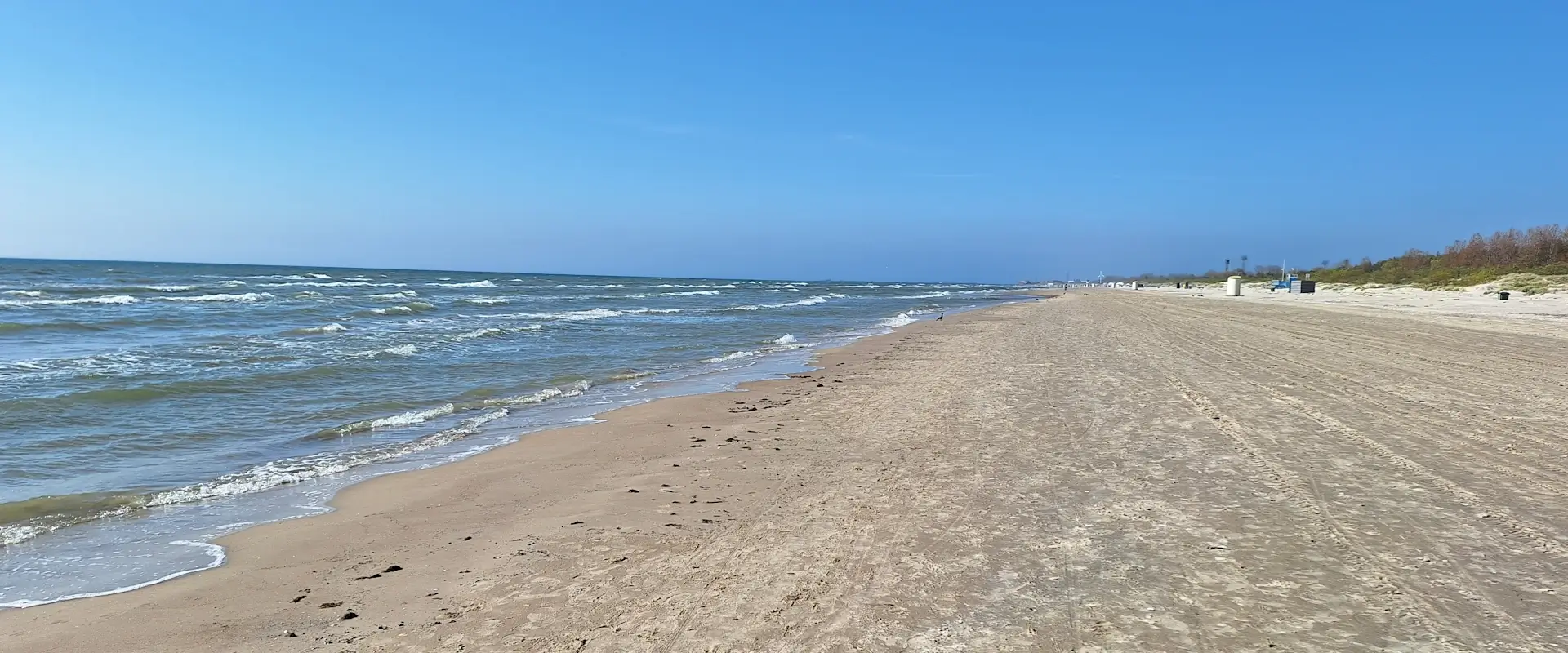

Most guides to Liepāja beach describe a single 8-kilometre stretch of Blue Flag sand and leave it at that. The signs at the beach entrances tell a different story.
Quick facts — Liepāja Beach
- Location: Western Baltic coast, within Liepāja city, Latvia
- Length: 8 km city beach; Liepājas nūdistu pludmale is a separate section to the south
- Blue Flag: Yes, every year since 2001
- Entry: Free
- Lifeguards: Central section, summer season
- Dogs: Allowed on leash
- Best for: Families, kitesurfers, windsurfers, amber-hunters, dog owners, and Baltic beach breaks without resort crowds
- Not ideal if: You want sunbed hire, beach clubs, reliably warm water, or a classic resort setup
- Water temperature: 19–22°C in July–August; 15–18°C in June; 14–17°C in September
- Getting there: 10–15 minute walk from Liepāja Old Town via Kūrmājas prospekts; parking near entrances; buses serve the area
- Accessibility: Wheelchair-accessible boardwalk and swimming chair at the central section; audio buoys for visually impaired swimmers
Every few hundred metres along the promenade, a board indicates what that section is for: supervised swimming, water sports, dogs, or nothing specific. The beach operates in distinct zones. Most visitors — and almost every online guide — walk straight past them.
In this guide
- What makes Liepāja beach worth visiting
- A map of the beach — which section suits you
- Water sports on Liepāja beach
- Amber hunting — and the phosphorus warning
- Jūrmalas parks — beach and forest in one walk
- Best time to visit
- Who is Liepāja beach for?
- Amenities and getting there
- How it compares to nearby beaches
- Frequently asked questions
That matters if you’re trying to find the kitesurf launch area. It matters whether you’re visiting with a dog or a young child, or planning to hunt for amber after a storm. And it matters when it comes to the phosphorus hazard, which washes up on the same stretches as amber, looks similar, and has put people in hospital.
This guide maps Liepāja beach in full: all zones, including the officially designated nudist beach south of the main strip, plus water sports, the amber story, Jūrmalas parks, best months to visit, and how the main beach compares to the other options nearby.
What makes Liepāja beach worth visiting
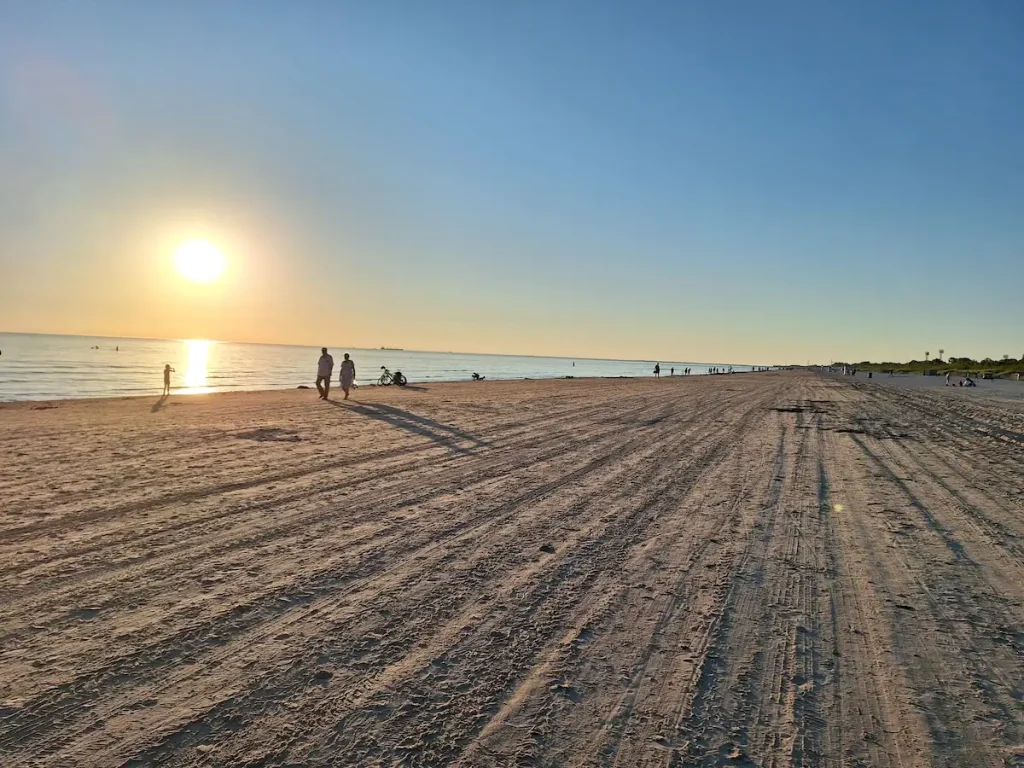
Liepāja beach is an 8-kilometre Blue Flag beach on the Baltic Sea coast of western Latvia. The sand is unusually fine-grained and white, wide enough — 50 to 80 metres at the broadest — so it never feels packed with summer crowds. It has held Blue Flag status every year since 2001, meeting 33 quality criteria covering water, coastline safety, services, and environmental standards.
Liepāja has been a resort destination since the 1860s, when European and Russian aristocrats came to take the sea air — the Tsar included. The infrastructure around the central beach reflects that history: a solid promenade, Jūrmalas parks running parallel to the sand, and a city close enough to walk back to for lunch.
The Baltic doesn’t warm the way the Mediterranean does. Water temperatures peak at 19–22°C in July and August — comfortable enough for swimming, but not warm. Outside those months they drop quickly. Worth knowing before you book.
On the plus side, it’s a draw for tourists looking for “coolations” — beach resorts that are cooler than the soaring temperatures in the Mediterranean.
The wind is a constant. Liepāja sits on an exposed stretch of coastline with no landmass to the west. On most days, you’ll feel it.
A map of the beach — which section suits you
Liepāja beach is divided into activity zones, each signed at the beach entrances. The central Blue Flag section near Kūrmājas prospekts has lifeguards, facilities, and an accessible boardwalk. A water sports zone runs to the north. Dogs are permitted in a designated section beyond the fishermen’s memorial. A separate nudist beach — Liepājas nūdistu pludmale — sits south of the main strip.
Central section (near Kūrmājas prospekts)
The Blue Flag flies here: lifeguards on duty in summer, changing facilities, showers, toilets. A wide wooden boardwalk runs from the lifeguard station to the waterline — wide enough for wheelchair access. A swimming wheelchair is available on request. Audio buoys are installed for visually impaired swimmers.
Liepāja was the first beach in Latvia to introduce both adaptations in the early 2000s.
This is the busiest part of the beach. On hot weekends in July, it fills up. It rarely feels like Jūrmala, but it’s not quiet either.
Water sports zone
South of the central section, consistent southwest winds make this stretch one of the better kitesurfing and windsurfing spots on the Latvian coast. The zone is marked at Dienvidrietumu pludmale.
Beach volleyball courts are located at various also are various section along Liepāja Beach – both on the beach and behind the sand dunes.
The operators worth checking before travelling is Windsurfing Club Rietumkrasts.
Dog-walking zone
Dogs are permitted north of the Monument in Commemoration of the Perished Fishermen and Seafarers and signs at the entrances to the beach outline where dog walking is allowed. Dogs must always be on a leash.
Quiet southern stretch
As you move south past the central section, the infrastructure thins. You’ll still find lifeguards, but less signage and fewer facilities. The sand is still the same. Apart from the hub point at the Liedagas iela entrance, it’s the better stretch for walking, solitude, and relaxing. Supervised swimming is still accessible.
Liepājas nudist beach
Further south — past the end of the main 8 km city beach — Liepājas nūdistu pludmale is a separate named beach in the Pērkone/Grīnvalti area, approximately 2.8 km from the central section.
The beach is clearly signed, approximately 1.5 km long, and has no amenities — no toilets, no changing rooms, no café. Reached via Vētru iela and heading south.
It’s used regularly and has a low-key, local feel. This isn’t a resort nudist beach; it’s a wild beach with a designated use.
Water sports on Liepāja beach
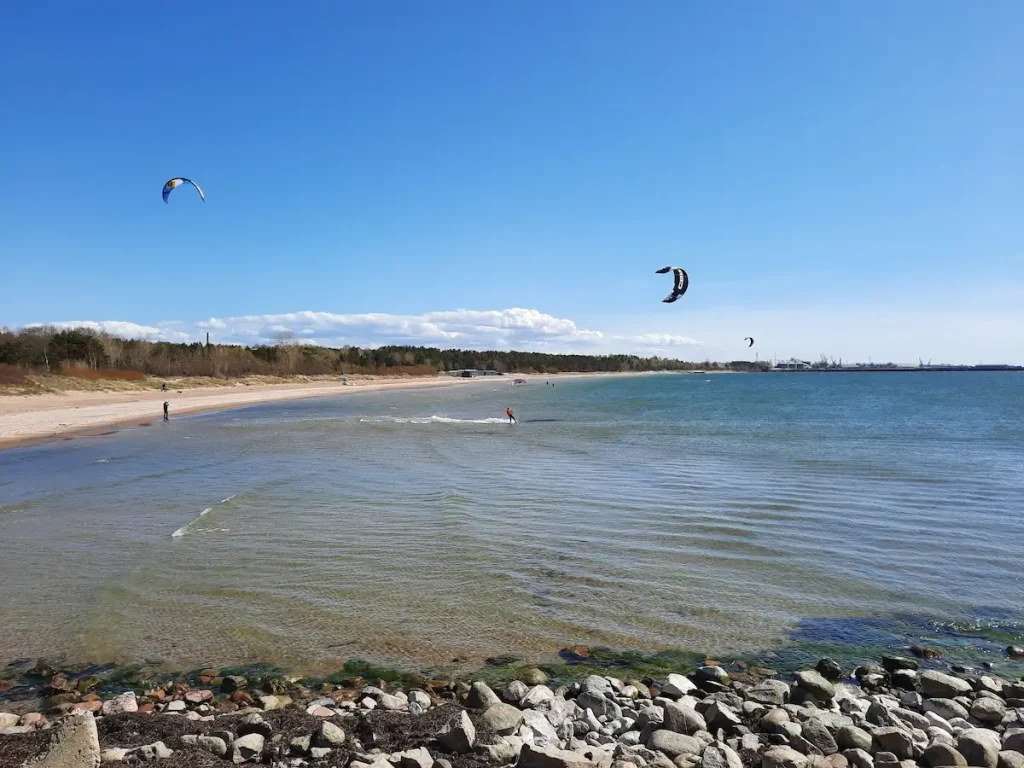
Liepāja is one of the better kitesurfing and windsurfing locations on the Latvian Baltic coast. The reason is simple: the city faces open water with no sheltering landmass to the west, producing consistent southwest winds throughout the year. Lessons and equipment hire are available locally. The season without a wetsuit runs June–August; with a wetsuit, March–November.
The conditions produce chop rather than swell — the Baltic is a relatively enclosed sea with limited fetch. That makes it better for flat-water riding than for wave sports, and ideal for beginners taking lessons or recreational riders looking for reliable wind.
Beyond water sports, the beach has volleyball courts in the water sports zone. The cycle path along the promenade connects to routes through Jūrmalas parks and further north towards Karosta. Cycling is the most efficient way to cover the beach’s full length — and with the wind at your back heading north, it’s quick. The return trip reminds you why the kitesurfers are all smiling.
→ This guide has everything you need to know on where to stay in Liepāja.
Amber hunting on Liepāja beach — and the phosphorus warning
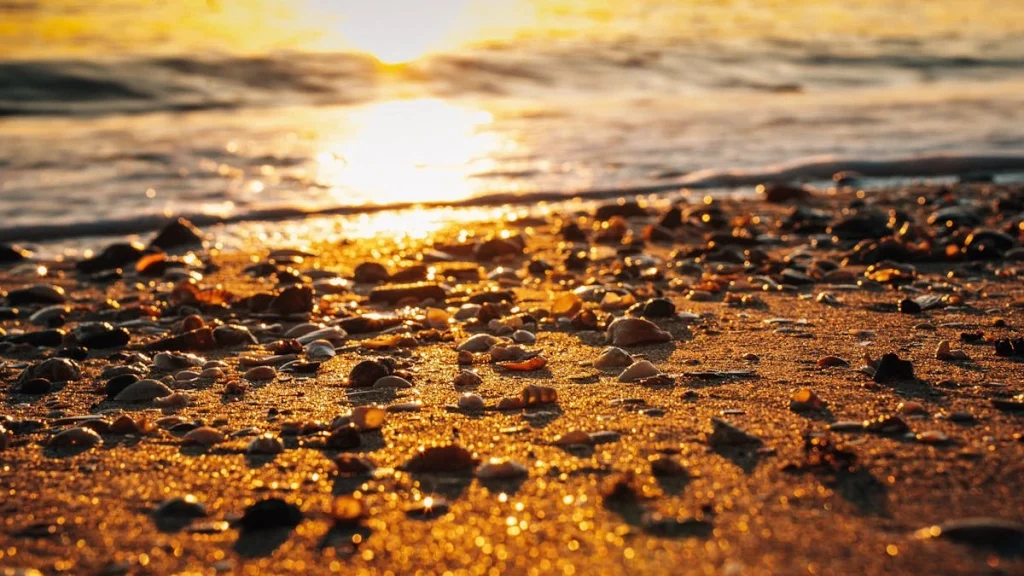
Amber washes ashore on Liepāja beach after southwest storms, mixed in with seaweed and shells at the waterline. There is a documented hazard on the same stretch: white phosphorus from Soviet-era military dumping washes up along the Liepāja–Bernāti coastline. It resembles amber, ignites when dry, and has caused burns requiring hospital treatment. Liepāja Hospital treats phosphorus burns periodically.
The amber
The best time to look is the morning after a significant southwest wind, when the storm has stirred the seabed and the tide has dropped back. Work through the seaweed line. Pieces are typically small, smoothed, and yellow-orange.
It’s an opportunistic activity rather than a reliable one. Some visits produce nothing; others are better. The combination of the right storm and the right stretch of beach matters more than effort.
The phosphorus hazard
The two materials look similar when wet — phosphorus tends to be paler and slightly more crumbly than amber, but the difference isn’t always obvious in the field. When wet, phosphorus is harmless. When dry, it ignites spontaneously and causes deep, severe burns.
The official advice from liepaja.travel is specific: do not put finds in your pocket. Place them in a sealed container, keep them wet until you can verify them, and do not set pieces down on hard dry surfaces. A pale, easily crumbled, slightly waxy piece that doesn’t have the feel of resin — treat with caution.
The phosphorus originates from decades-old Soviet-era military waste dumped in the Baltic. It has been washing up for years and there is no clear end date. The hazard is highest after storms — which is also when amber is most likely to appear.
Most amber-hunters will never encounter phosphorus. But anyone beachcombing on this stretch should know the risk before they start.
Jūrmalas parks — beach and forest in one walk
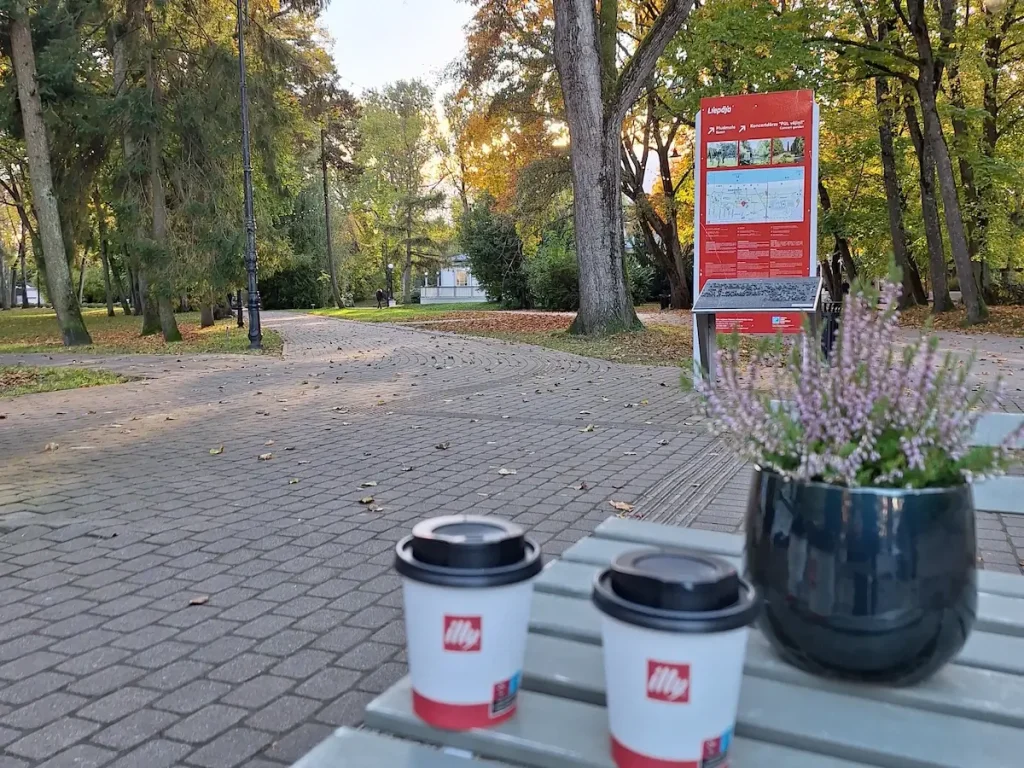
Jūrmalas parks (Seaside Park) is a 3-kilometre wooded park running immediately alongside Liepāja beach, separated from the sand by pines.
One of the largest wooded parks in Latvia, it contains 173 recorded species of trees, a skate park, mini-golf, a swan pond, trampolines, go-karts, and Spoku koks (Ghost Tree) — a memorial to the Latvian rock band Līvi. In summer, cafés operate inside the park. So, plenty of things to do in Liepāja in any season.
Most visitors treat the park and the beach as separate destinations. They’re not — you move between them continuously. Beach entrances and park paths run parallel, connecting wherever there’s a gap in the pine line.
The park has a deliberate design from the resort era: a mix of formal landscape elements — geometric flower beds, cut hedges, an Art Nouveau fountain, a swan pond — alongside natural pine forest terrain. It’s been here, in various forms, since the 1860s.
A walk through the full length of the park takes around 45 minutes at an unhurried pace. Combined with a morning on the beach, it covers a reasonable half-day without needing to go into the city centre at all. The path is flat, shaded, and bike-friendly.
The beach and Jūrmalas park often host annual events and concerts. You can learn more about this in the guide to what’s on in Liepāja.
Beach bars and cafés
Five venues operate along the beach and Jūrmalas parks strip in summer, covering the range from quick coffee on the sand to a full sit-down meal. All are seasonal — most open from late May or June and close by October. Hours shift year to year, so check the current status before making a dedicated trip.
Mermaid — Located at the northernmost end of Liepāja Beach, access is from Roņu iela, and free parking is available. Good prices for food and drink.
Sun Red Buffet — Popular beach bar that sells drinks and burgers. Live music during the summer is usually on in the evenings. Access is via Jūrmalas Park from Peldu iela. Free parking on Peldu iela and paid parking on Liepu iela in the summer season.
7. Linija — Close to Sun Red Buffet, the beach bar has a wide drinks and food menu.
Cukurfabrika — Cukurfabrika sells mostly drinks. Access is from the path behind the Dauvava Stadium.
For more information on where to each on Liepāja Beach and in the city in general, my Where to Eat in Liepāja Guide has all you need to know.
Best time to visit Liepāja beach
The reliable swimming window at Liepāja beach is July and August, when Baltic water temperatures reach 19–22°C. June and September offer more space on the sand, lower accommodation prices, and long daylight hours — up to 18 hours in June — but cooler water. Outside the June–September window, the beach is walkable year-round but not suitable for swimming.
| Month | Avg water temp | Verdict |
|---|---|---|
| May | 11–13°C | Cold; not suitable for swimming |
| June | 15–18°C | Cool; possible for the determined |
| July | 19–22°C | Ideal |
| August | 18–21°C | Ideal; quieter in late August |
| September | 14–17°C | For the hardy |
| October | 10–12°C | Not suitable for swimming |
The shoulder months have practical advantages. June: quiet beach, very long days, cheaper accommodation, and the Liepāja 2027 programme running events without peak-season crowds. Late August and September: similar logic — the beach empties after the school holidays end, and the Baltic light in September is good for photography.
Winter visits have their own logic. After storms the beach is dramatic: wide, exposed, big skies, real waves. Not for swimming, but the best conditions for amber-hunting — and also when phosphorus is most likely to wash up alongside it.
Who is Liepāja beach for?
Liepāja beach suits families with young children, kitesurfers and windsurfers, and visitors wanting a Baltic beach break without resort crowds. There is a designated dog-walking zone. It is not suited to visitors expecting sunbed hire, beach clubs, or warm water outside July and August.
The shallow water and gentle approach gradient make the central section well-suited for children. Lifeguard cover in summer, accessible facilities, and a swimming wheelchair available on request extend that further. Liepāja was the first beach in Latvia adapted for visitors with disabilities, and the central section still reflects that investment.
For water sports visitors, the beach delivers what the forecast consistently promises: wind. Kitesurfing and windsurfing work here in seasons when much of the Baltic coast doesn’t offer reliable conditions.
What Liepāja beach doesn’t offer is a resort experience. No sunbed hire. No beach club. No cocktail bar on the sand. The beach bars that operate in summer are seasonal, basic, and close when the weather turns. Self-sufficient visitors — bring your own food, your own kit, your own entertainment — do well here. Those expecting Mediterranean infrastructure will be disappointed.
Amenities and getting there
Liepāja beach is free to enter. The central section has summer lifeguards, changing facilities, showers, and toilets. From Liepāja Old Town, the main beach entrance is a 10–15 minute walk via Kūrmājas prospekts. Parking is available near the beach entrances and Jūrmalas Park. For Liepājas nūdistu pludmale, take bus #11 south or drive and park at Vētras iela.
Full amenities at the central Liepāja beach section:
- Entry: Free
- Lifeguards: Summer season
- Changing rooms, showers, toilets: Yes
- Accessible boardwalk: From lifeguard station to waterline; suitable for wheelchairs
- Swimming wheelchair: Available on request at the lifeguard station
- Audio buoys: In place for visually impaired swimmers
- Dogs: Allowed beyond the fishermen’s memorial (signed at entrances), leash required
- Parking: Available near multiple beach entrance points along the promenade
Getting there:
- On foot: 10–15 minutes from Liepāja Old Town via Kūrmājas prospekts
- By bike: Cycle path runs the full length of the beach on the cycle/footpath behind the dunes — flat, consistent
- Buses: Bus #6 and disembark anywhere along Uliha iela or at XL Sala and walk west to the beach
- Nudist beach: Bus #11 from city centre heading south; or drive south on Jūras iela
The wooden promenade boardwalk is the main orientation point. Beach entrances come off it at regular intervals, each signed with the zone designation.
For accommodation near the beach, the main hotel cluster in central Liepāja is within walking distance. Book ahead for July weekends — capacity is limited and the city fills up in summer.
How Liepāja beach compares to nearby options
Three beaches within reach of Liepāja offer genuinely different experiences. None of them replace the main city beach — they’re different use cases.
Liepājas pludmale vs Bernāti
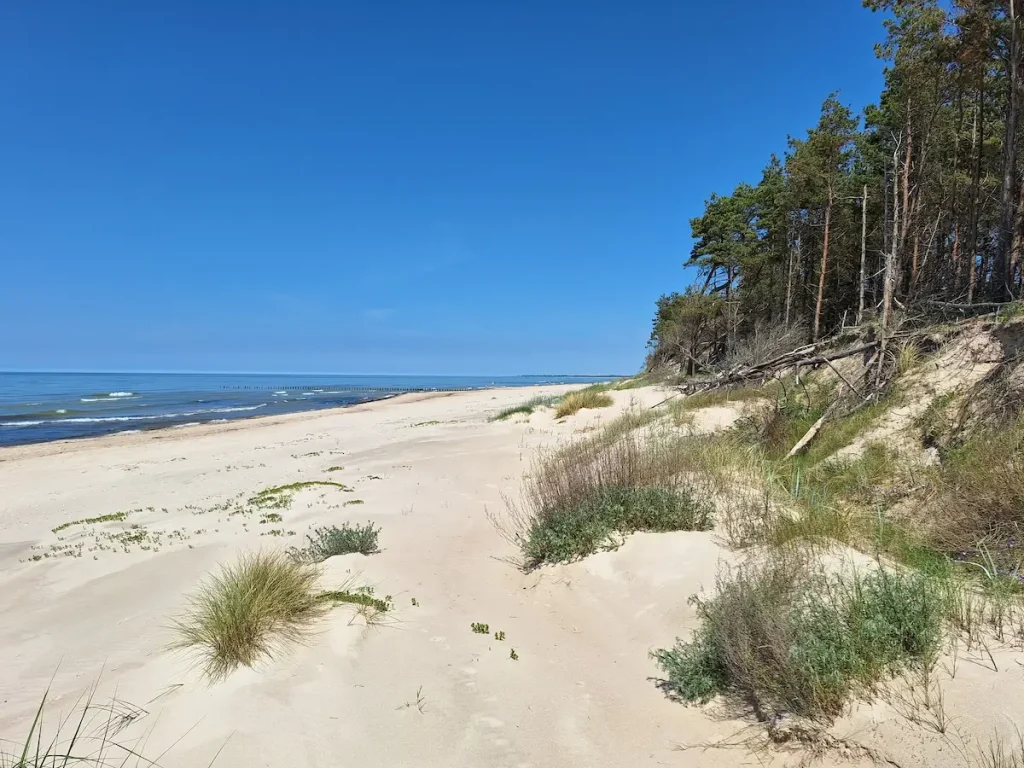
Bernāti is a wild beach within Dabas parks “Bernāti” (Bernāti Nature Park), 30 km south of Liepāja. No lifeguards. No facilities. Documented rip currents. Latvia’s highest dune — Pūsēnu kalns at 37 metres — sits within the park, with steep sandy bank descending to the beach. Bernāti suits hikers and nature-seekers. It is not a substitute for a supervised family swim.
The contrast with the city beach is significant: no infrastructure, no zones, no promenade. Pine forest backs onto the dunes, and the coastline is genuinely wild.
The rip current risk is real and the beach is unsupervised — if you’re going with children, the Liepāja city beach is the right choice.
Car is required. No practical public transport option for tourists exists, although there is a bus that runs there.
| Feature | Liepājas pludmale | Bernāti |
|---|---|---|
| Distance from Liepāja | City beach | 30 km south |
| Lifeguards | Yes, summer season in the central section | No |
| Facilities | Yes | None |
| Rip currents | Low risk | Documented |
| Atmosphere | City beach; promenade nearby | Wild; pine forest and dunes |
| Best for | Families, water sports, general use | Hiking, nature, photography, solitude |
| Requires car | No | Yes |
Liepājas pludmale vs Karostas pludmale
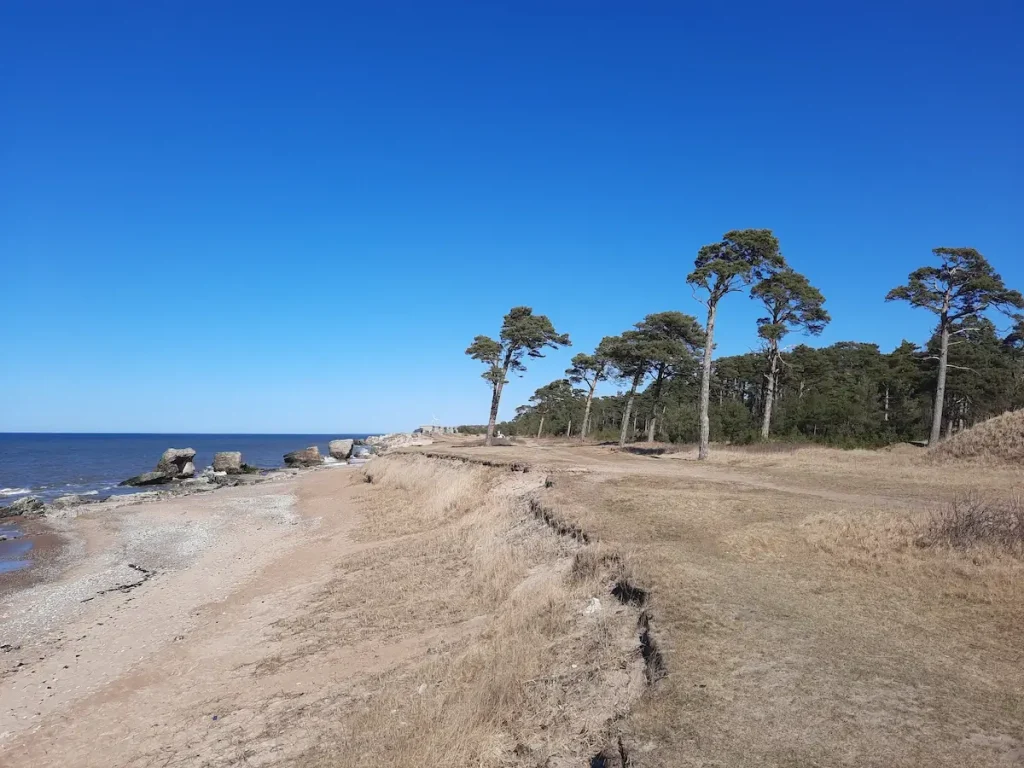
Karostas pludmale (Karosta beach) sits north of the city, accessed from the Karosta district. It’s suitable for swimming or sunbathing, in fact, locals prefer it to the central Liepāja beach because it gets deeper quicker.
The defining feature is the Ziemeļu forti (Northern Forts) — military fortifications built during the Russian Empire era before the First World War (and also exploded unsuccessfully), now partially collapsing into the Baltic. No lifeguards. No facilities. Coarser sand.
The bunkers at various stages of collapse, exposed rebar at the waterline, and sections of escarpment breaking the dune line make it one of the most visually striking stretches of coast in Latvia.
It works best as part of a wider Karosta visit — the naval district, the military prison, the decommissioned warships — with the beach as one component rather than the destination itself.
If you’re spending more than a day in Liepāja, Karostas pludmale is worth the trip. Less than 20 minutes from the city centre. The beach and forts take 1–2 hours to walk properly.
Liepājas pludmale vs Palanga
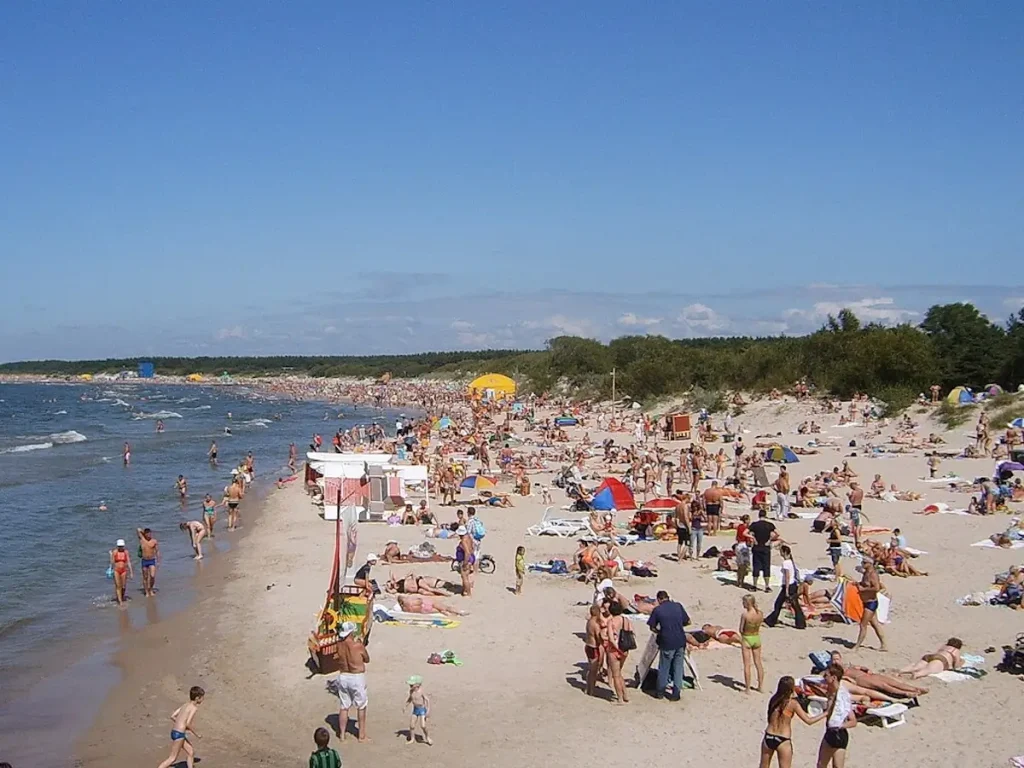
Palanga is Lithuania’s main beach resort, roughly 30–35km south of Liepāja across the border — within the Schengen area, no passport control. It’s known for its wooden pier, restaurant-lined pedestrianised Basanavičiaus gatvė. The town has a full resort feel: amber shops, restaurants, bars, nightlife.
For a full comparision, my guide to Liepāja beach vs Palanga sets out which beach is best for you and why many Lithuanians are making the 70km trip north to Liepāja.
Liepāja’s beach is quieter, less commercial, and cheaper.
The choice comes down to what type of visit you want. Palanga delivers more resort infrastructure, more entertainment options, and a livelier scene in summer. Liepāja offers the same Blue Flag coastline with a city behind it that has its own character — architecture, music, history, and the Liepāja 2027 cultural programme — at a lower price.
Liepājas pludmale vs Šķēdes pludmale
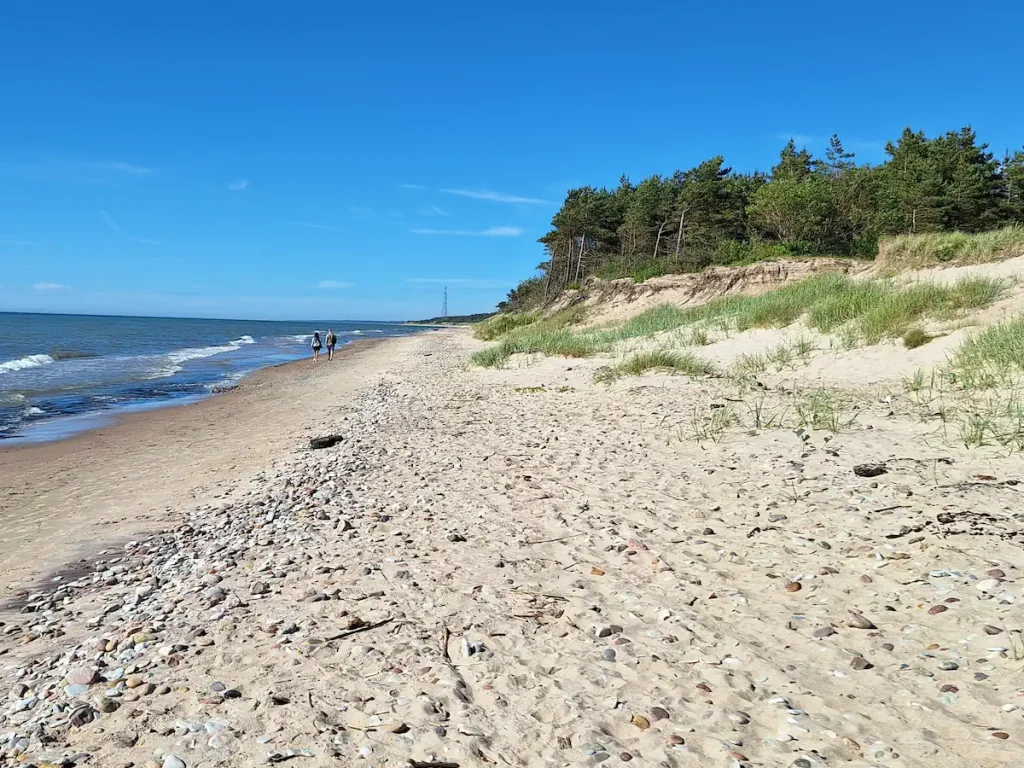
Šķēdes pludmale (Šķēde beach) lies north of Liepāja, past the city limits. Locals use it as a swimming beach — the water drops to depth quickly close to the shore, which suits swimmers who prefer deeper water over the shallow gradient of the main city beach. There is parking directly at the beach. No lifeguards, no facilities, no promenade.
The surface is different to the main beach — stones rather than sand, steeper dunes, a more exposed feel. The sea state tends to be a little rougher. Neither of those things stops people swimming here; they just make it a different kind of beach day.
Šķēdes pludmale is also the location of the Šķēde Dunes — where around 2,700 Jews from Liepāja were murdered in December 1941. The memorial is maintained and worth visiting.
| Feature | Liepājas pludmale | Šķēdes pludmale |
|---|---|---|
| Surface | Fine white sand | Stones |
| Water depth | Shallow gradient | Drops quickly; deeper close to shore |
| Parking | Roadside near entrances | Yes, at beach |
| Lifeguards | Yes, summer season in the central section | No |
| Facilities | Yes | None |
| Atmosphere | City beach; promenade | Wild, exposed, local |
| Best for | Families, water sports, general use | Deeper-water swimming; getting away from the crowds |
Frequently Asked Questions
Is there a nudist beach at Liepāja?
Yes. Liepājas nūdistu pludmale is a separate named beach south of the main city beach, in the Pērkone/Grīnvalti area. It is clearly signed, around 1.5km long, and has no amenities.
Take bus #4 from the city centre or drive south on Jūras iela.
Can you find amber on Liepāja beach?
Yes, but do not treat it as guaranteed. Amber can wash ashore on Liepāja beach after southwest storms, usually mixed with seaweed along the waterline.
It is much more likely after rough weather than on a calm beach day. Read the phosphorus warning before collecting anything on this stretch of coast.
Is the white phosphorus danger serious?
Yes. It is real, though most visitors will never encounter it. White phosphorus from Soviet-era military dumping has washed up on the Liepāja–Bernāti coastline for decades.
The problem is that it can resemble amber. It may look slightly paler, more crumbly, or waxy rather than resinous. When dry, it can ignite and cause severe burns.
If something looks pale, crumbly, waxy, or unusual in the seaweed line, do not pick it up, pocket it, rub it, test it, or let it dry. Leave it alone and report it to local authorities or beach staff if available.
Are dogs allowed on Liepāja beach?
Yes, but only in the designated zone north of the fishermen’s memorial. Dogs must be kept on a leash.
The dog-friendly section is signed at beach entrances and sits beyond the central supervised area, so allow extra walking time from the main promenade.
Is Liepāja beach better than Jūrmala?
Different, not better. Jūrmala is a more developed resort near Riga, with more facilities, a longer promenade, and preserved wooden villa architecture that Liepāja does not have.
Liepāja beach is quieter, less expensive, and feels more local. Water and sand quality are comparable, and both hold Blue Flag status.
For a resort experience near Riga, Jūrmala is the obvious choice. For a Baltic beach break without the day-tripper crowds and Riga price premium, Liepāja makes sense.
When is the best time to visit Liepāja beach?
July and August are best for swimming, when water temperatures usually reach 19–22°C.
June and September work better for fewer crowds, lower prices, and long daylight hours. The beach is walkable year-round, but outside June–September it is not really swimming weather. Baltic Sea, not bathwater. Worth knowing.
Picture: Palanga Beach — Raimundas Budzeika, CC BY-SA 3.0 via Wikimedia Commons.