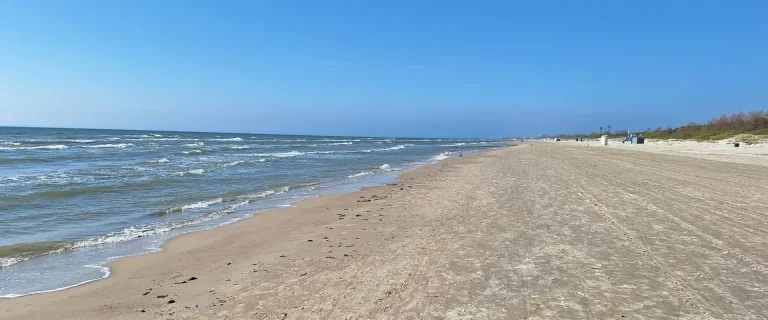
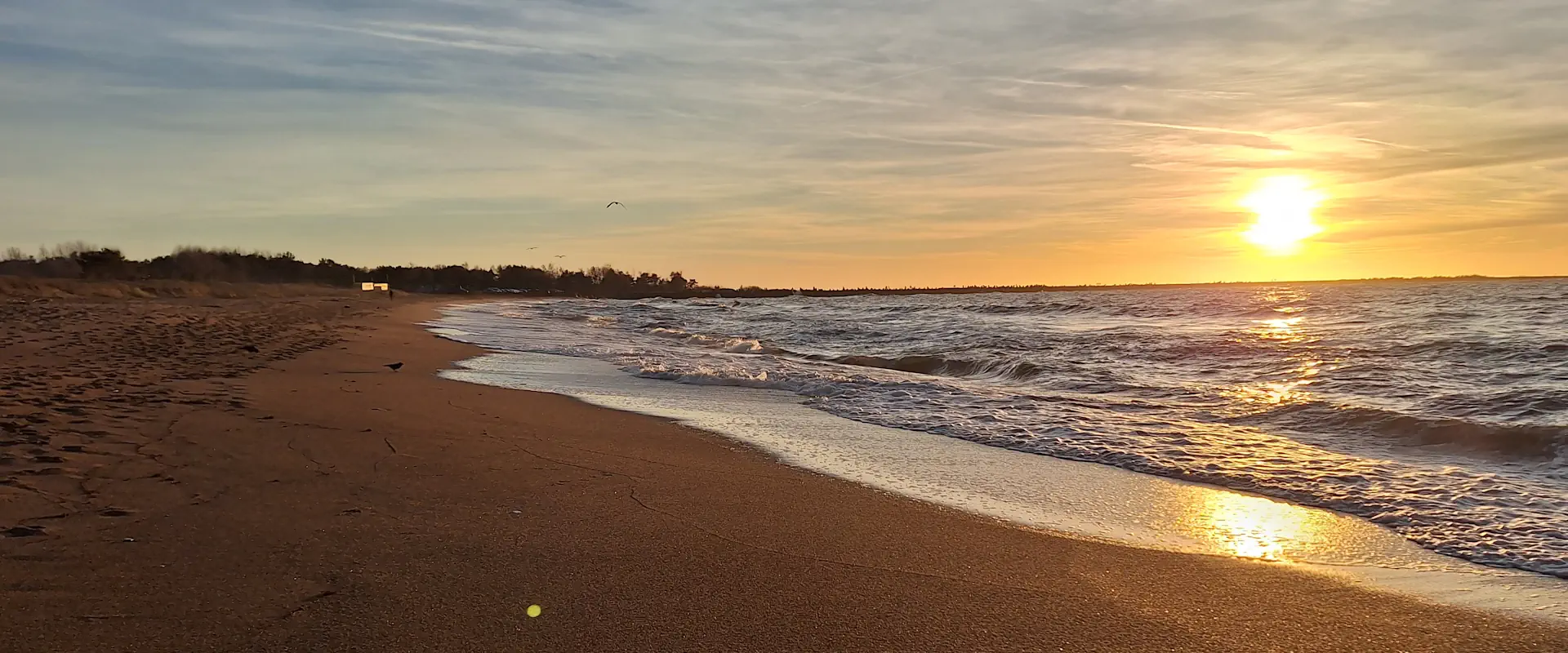

Liepāja beach vs Palanga is the comparison most Baltic-bound travellers end up making anyway. One beach in Latvia, one in Lithuania, 75 km apart, and most people researching either one stumble onto the other within a few clicks. The problem is that almost nothing written about the two is written by someone who’s actually stood on both.
Quick facts
- Liepāja beach: 8km city beach, Blue Flag since 2001
- Palanga beach: Roughly 18km of sand, Lithuania’s main resort
- Distance apart: 75 km, no passport control (Schengen)
- Cost difference: Palanga runs noticeably higher in July–August
- Best for: Liepāja — quieter beach days, lower prices, a real city behind it. Palanga — pier, nightlife, resort infrastructure
- Not ideal if: you want Liepāja for nightlife (go to Palanga), or Palanga for a quiet swim without crowds (go to Liepāja)
- Getting there: Car is easiest; no direct public transport link between the two beaches
Tourist board copy for both beaches uses the same words — “sandy,” “family-friendly,” “Baltic” — but how else would you describe a beach in the Baltics? What the descriptions of Liepāja beach and Palanga doesn’t tell you what actually differs: the crowd, the cost, and what you’re paying for. Guides written from one side rarely mention the other by name.
Here is the full guide to Liepāja beach if you’re already in the town and want to find out about its facilities and how far it is from the town centre.
This is a comparison from someone who lives 50 km from the border and has spent enough Julys on both stretches of sand to tell you honestly which one fits which kind of visit — and why the traffic between them has started running one way.
What is Palanga, and how does it compare to Liepāja?
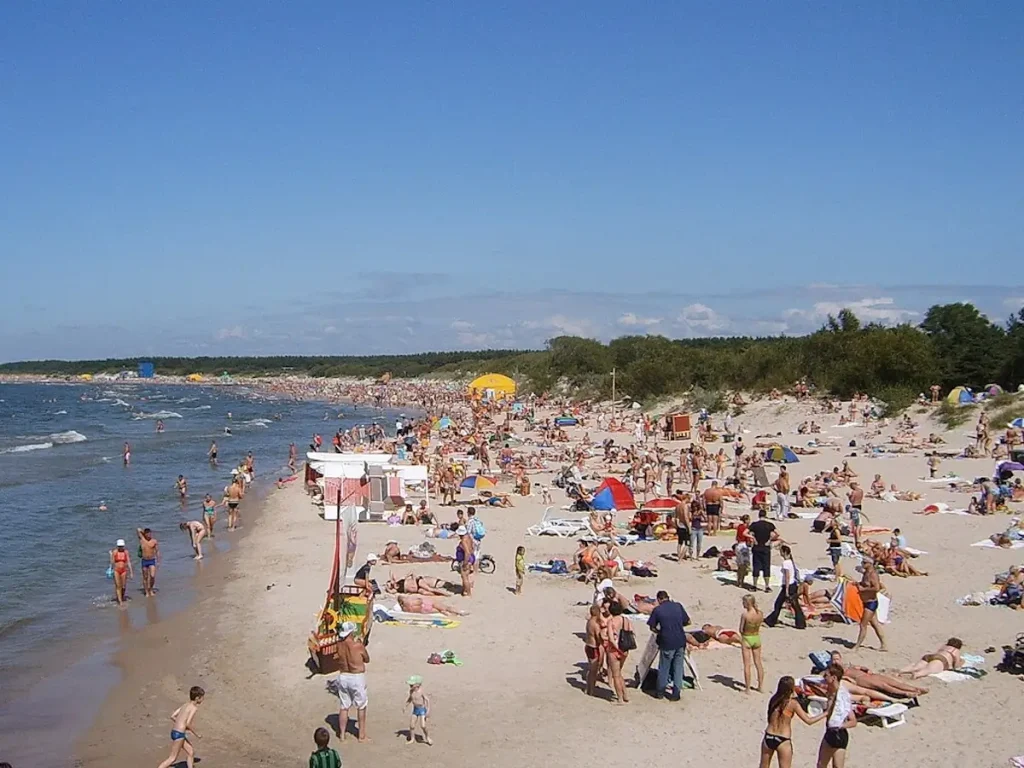
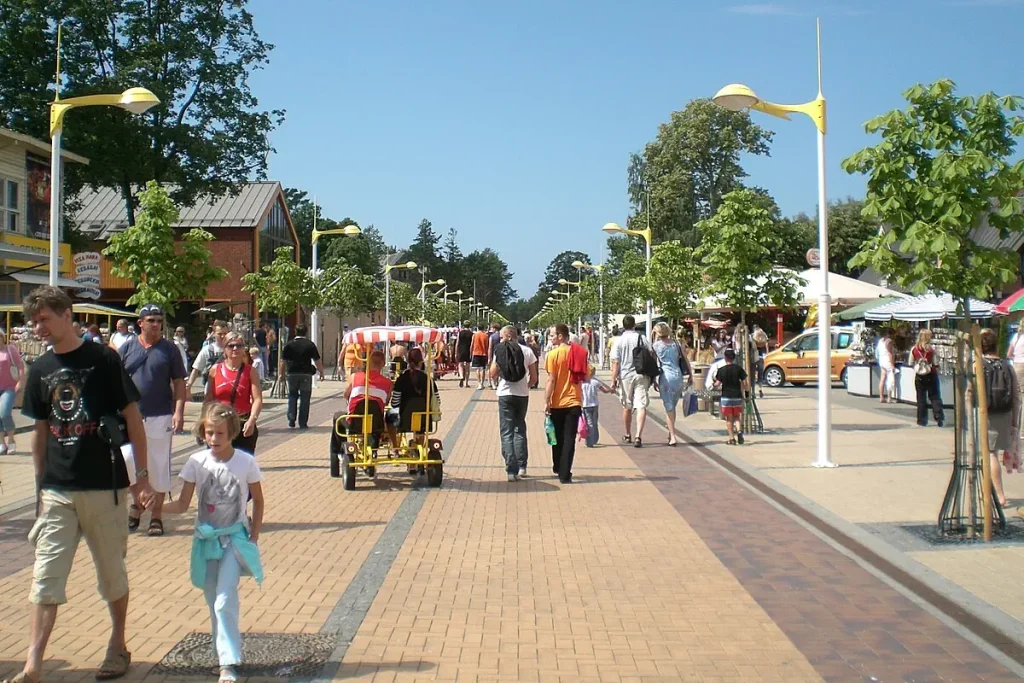
Palanga is Lithuania’s main seaside resort. It sits roughly 75 km south of Liepāja, across the Latvia–Lithuania border. The beach runs about 18 km. A 470-metre wooden pier — Palangos tiltas — juts into the sea. Basanavičiaus gatvė, the pedestrianised main strip, is lined with amber shops, bars, restaurants, and a ferris wheel
Liepāja’s beach is smaller. Quieter too. An 8km Blue Flag stretch, backing onto Jūrmalas parks. Behind it sits a working city, not a resort town — its own industry, its own music scene, Karosta’s naval heritage a few kilometres north.
The border between them is inside Schengen — no passport control, no currency change (both use the euro) — so the comparison is a genuine day-trip decision, not a cross-border expedition.
Why Lithuanian visitors are increasingly choosing Liepāja
Palanga’s summer prices have climbed faster than its infrastructure. Lithuanian travel forums increasingly name Liepāja as the cheaper, quieter option just across the border. Even some of Lithuania’s new outlets have called the two beaches “similar, though one has more comfort”.
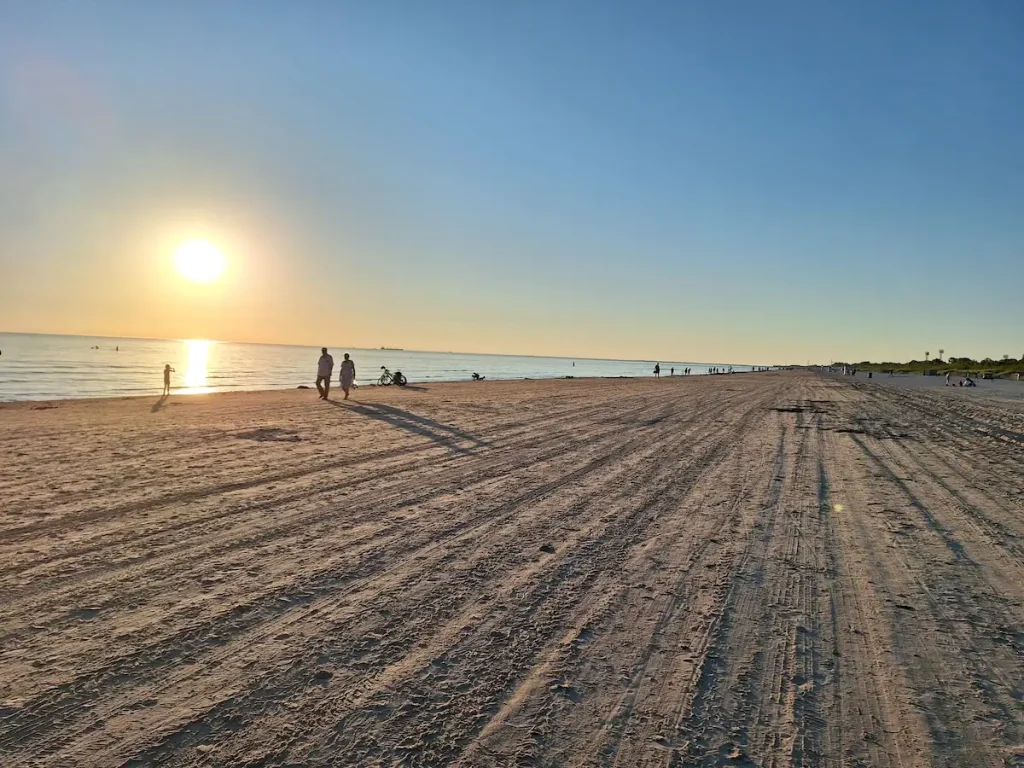
This isn’t Liepāja beating Palanga on quality. Palanga still has the pier. Still has the nightlife. Still has the longer beach. What’s changed is value. A week’s accommodation in Palanga now costs noticeably more than the same week in Liepāja. The crowds have grown too, without the experience improving to match.
Liepāja was never trying to be a resort town. That’s exactly what’s pulling in visitors who’ve decided Palanga isn’t one either. Not at this price.
Liepāja’s beach bars vs Palanga’s inland strip
Liepāja wins this one outright. Palanga doesn’t have proper beach bars — its food and drink cluster on Basanavičiaus gatvė, a five-minute walk inland from the sand.
Liepāja’s beach has four cafes and restaurants right on it. Mermaid sits at the northern end, access via Roņu iela, free parking included. Sun Red Buffet serves drinks and burgers, with live music most summer evenings. 7. Linija sits close by, with a wider food and drink menu. Cukurfabrika, reached via the path behind Daugava Stadium, mostly does drinks.
None of these are polished. All of them are on the sand or a few steps from it. That’s the trade: Palanga gives you Basanavičiaus gatvė’s hotels, cafés, restaurants and a ferris wheel — a proper resort strip, but set back from the beach. Liepāja gives you a drink and live music, with your feet in the sand and watching the sun set instead.
The numbers: beach length, cost, pier, and crowds compared
| Feature | Liepāja beach | Palanga beach |
|---|---|---|
| Country | Latvia | Lithuania |
| Beach length | 8 km city beach (12 km full coastline) | Around 18 km |
| Distance apart | — | 75 km south of Liepāja, no border control |
| Atmosphere | Quiet, local feel, working city behind it | Full resort Busy Jul–Aug |
| Pier | No | Yes — Palangos tiltas, 470m |
| Nightlife / restaurants | Limited near the beach itself | Extensive, concentrated on Basanavičiaus gatvė |
| Crowds, July–August | Moderate | High |
| Amber shopping | Mostly city centre | Along the beach promenade |
| Peak-season cost | Lower | Higher, rising |
| Best for | Quiet beach days, combining with a real city | Full resort holiday, pier, nightlife |
Who Liepāja suits, who Palanga suits
Liepāja suits visitors who want a Baltic beach day without resort prices — plus a working city behind it. Karosta. Live music. Liepāja 2027 events. Palanga suits visitors who want the pier, the promenade nightlife, and don’t mind July crowds and rising prices for it.
Neither one is a downgrade. They’re built for different afternoons. Want space on the sand, a beach bar, and a lower bill? Liepāja wins. Want a pier at sunset and a bar on every corner? Palanga still does that better than anywhere on this coast.
This guide to accommodation in Liepāja has a comparison of the various hotels in the city and which one suits families, couples, and solo travellers.
Families generally do better in Liepāja. The central section has lifeguards, an accessible boardwalk, a shallow approach into the water. Less congestion getting on and off the sand too. Want a livelier evening scene? Stay on the Palanga side.
The wind and the transport gap: what catches visitors out
Wind is a constant on this stretch of Baltic coast on both sides of the border, not an occasional weather event. Liepāja’s exposed position means breezy days are the norm rather than the exception — pack a windbreak even in July. Palanga, backed by more pine forest closer to the sand, is marginally more sheltered in places.
The border itself isn’t the obstacle — it’s the transport. There’s no train connecting the two beach towns and only a bus service three times a day. A car is genuinely the practical option for a same-day comparison trip, and rental availability tightens in both towns during peak season.
If you’re basing yourself in Palanga expecting Liepāja’s quiet, or basing yourself in Liepāja expecting Palanga’s nightlife, you’ll be disappointed either way — pick the base that matches the trip you actually want, not the one with better beach-length statistics.
Driving from Liepāja to Palanga: routes, times, fuel stops
Driving is the only realistic option for a same-day comparison — allow 40–50 minutes each way, longer at the Latvia-side road junctions in peak July traffic. There’s no scheduled public bus service running the coastal route between the two towns; Lithuanian domestic buses to Palanga and Latvian regional buses to Liepāja don’t connect at the border.
Fuel up before crossing — border-town fuel prices run higher on both sides than a few kilometres inland. If you’re staying in Liepāja and want a Palanga day trip, plan to leave by mid-morning; the road back into Liepāja in the evening picks up returning day-trippers from around 6pm.
For visitors arriving via Stena Line’s Liepāja–Travemünde ferry [EXTERNAL LINK: Stena Line ferry booking page], Liepāja is the natural base — Palanga becomes a straightforward half-day add-on rather than a destination requiring its own logistics.
Liepāja’s own beach cluster has two other comparisons worth knowing before you decide where to base yourself: The full Liepāja beach guide for zones, water temperatures and amber-hunting on the home stretch plus a comparison of nearby beaches in Liepāja are worth visiting.
The city’s cultural calendar during Liepāja 2027 is also worth checking before you commit to a base — it adds evening options Palanga can’t match, even without the nightlife strip.
Frequently asked questions
Is Liepāja beach better than Palanga?
Neither is objectively better. They suit different trips. Liepāja offers a quieter beach, real beach bars, and lower prices, with a working city behind it. Palanga offers a 470m pier and inland nightlife on Basanavičiaus gatvė, plus a longer beach, at a higher and rising cost in peak season.
How far is Palanga from Liepāja?
About 30–35km south, across the Latvia–Lithuania border. No passport control — both countries are in Schengen. Same currency too, the euro. It’s a straightforward day trip by car, roughly 40–50 minutes each way.
Why are people switching from Palanga to Liepāja?
Palanga’s peak-season prices have risen faster than what you get for them. Crowding has grown too, without matching investment. Liepāja offers a comparable Baltic beach at a noticeably lower cost — that’s pulling Lithuanian visitors north.
Does Liepāja beach have bars and restaurants on the sand?
Yes. Four venues sit on or right next to Liepāja beach: Mermaid, Sun Red Buffet, 7. Linija and Cukurfabrika. All are seasonal, open roughly May/June to October. Palanga’s food and drink cluster inland instead, on Basanavičiaus gatvė.
Can you visit both Liepāja and Palanga in one day?
Yes, easily. Roads stay quiet even in summer, so driving takes about 40–50 minutes each way. Lux Express also runs a direct bus three times daily if you’d rather not drive. A half-day at each beach is realistic if you leave by mid-morning.
Is there a bus between Liepāja and Palanga?
Yes. Lux Express runs a direct coach three times a day between the two towns. There’s no train or ferry link, so it’s the bus or driving — no other scheduled option covers the route.
Picture: Basanavičiaus gatvė Palanga — Thomas Pusch, BY-SA 3.0 Creative Commons.