
Quick facts
- Location: Vecliepāja, on the Tirdzniecības canal, city centre
- Opened: 2015, 119 years after the city first planned one
- Halls: 3 — Great Hall (1,000), Chamber Hall (200), Experimental Stage (120)
- Best for: Concert-goers, architecture fans, anyone wanting a free look at a genuinely striking building
- Not ideal if: You need an English-language tour on a weekday — public tours default to Latvian
- Exterior/viewing gallery: Free
- Guided tours: Sundays 11:00 year-round, plus Saturdays June–August
- Parking: Free, next to the venue
You’ve seen the photos of an amber-coloured building on Liepāja’s waterfront and you’re wondering if it’s worth building into your trip — or if it’s only relevant if you’ve already got a concert ticket.
It isn’t. The building itself is a reason to visit, tour or no tour, ticket or no ticket. This guide covers what it actually is, how to get inside it properly, and what a first-time visitor needs to know before turning up.
What is Great Amber Concert Hall?
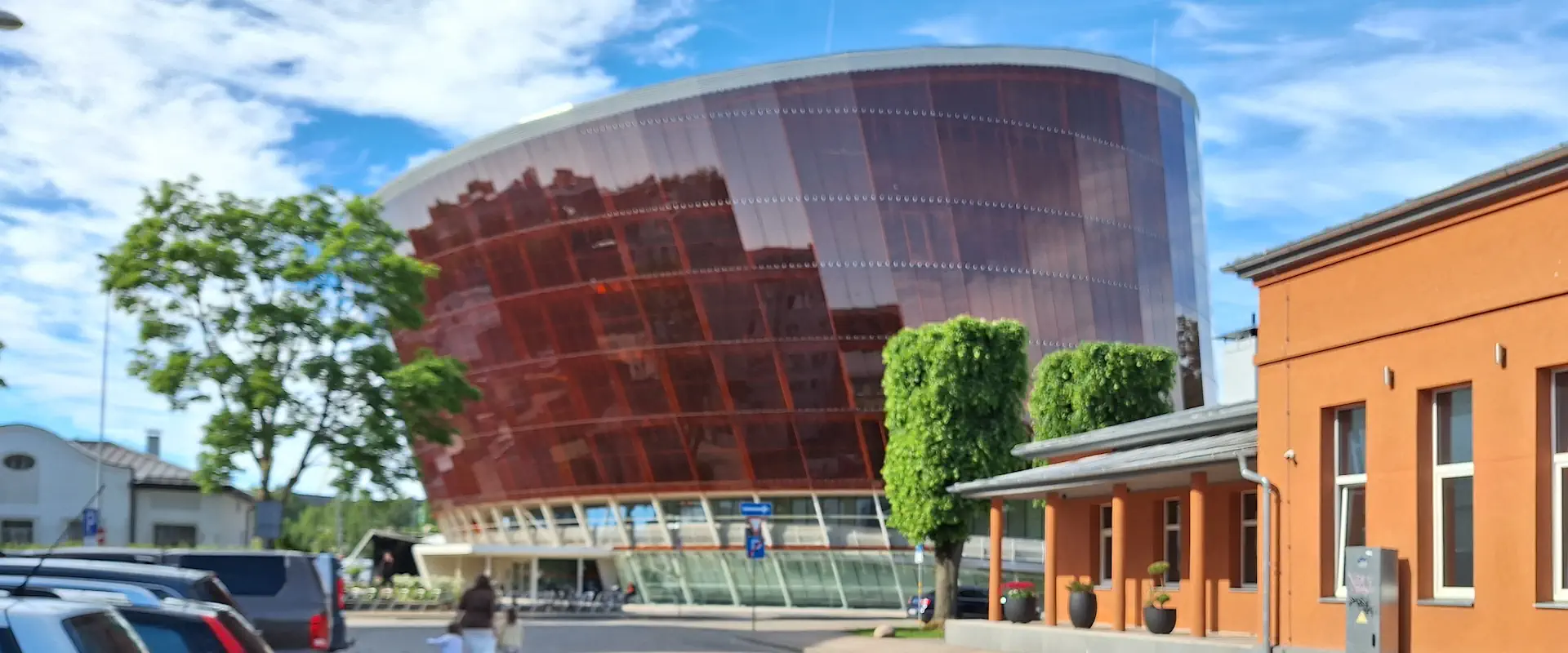
Great Amber Concert Hall (Lielais Dzintars) is Liepāja’s main concert venue and the permanent home of the Liepāja Symphony Orchestra (Liepājas Simfoniskais orķestris), the oldest orchestra in the Baltic states, founded in 1881. It opened in 2015 in Vecliepāja, the city’s old town, on the bank of the Tirdzniecības canal.
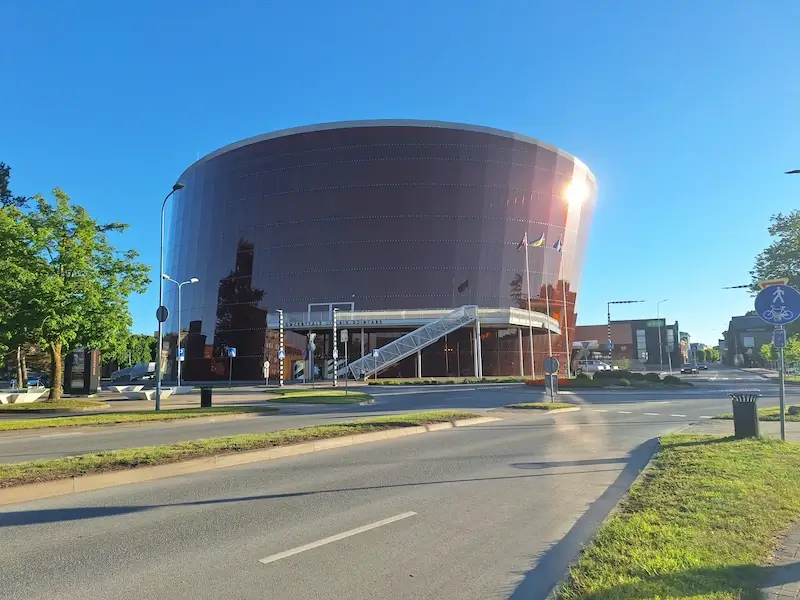
The building’s colour is amber — documented, straight from the architect’s own project notes, a nod to the material found along this coastline. The cone shape underneath that colour is a different story: locals will tell you it echoes a traditional Latvian woman’s hat, not the amber the building’s named after.
The building and its history
Liepāja’s city council first decided it needed a proper concert hall in 1896. The Great Amber didn’t open until 2015 — 119 years later, after wars, Soviet occupation, and the economic upheaval of the 1990s got in the way.
Austrian architect Volker Giencke won an international competition for the design in 2003. Construction started in 2013. The acoustics were developed by Karlheinz Müller of Munich firm Müller-BBM, using a terraced “vineyard” layout — the same principle behind some of the world’s best concert halls.
The building turned ten in 2025. The Liepāja Symphony Orchestra marked it with an anniversary festival across October and November, closing with Schoenberg’s Gurre-Lieder performed by more than 250 musicians on one stage.
The guide “Liepājas cultural venues” has the full rundown on the other places where you can watch concerts, listen to music, and
Touring the building
Public tours run every Sunday at 11:00, year-round, plus Saturdays during summer (June 1 to August 31). Tours last about an hour and are conducted in Latvian by default — the guide will switch to English or Russian if the group needs it, so ask when you arrive.
The tour covers the Great Hall and the building’s other performance and art spaces, where around 400 working and student musicians pass through daily. You get to step onto the stage itself. It ends with the panoramic view from the 7th-floor gallery — worth the visit on its own.
Groups of 10–15 can book a private tour separately, also around an hour (Amber Concert Hall official tour information page. There’s a café and restaurant on site (TINTO) and a Hall of Mirrors on the 6th floor, both open to visitors without a ticket.
Going to a concert
The annual “Stars in Amber” series brings international soloists to the Great Hall — performers who had little reason to route through Liepāja before this building existed.
Tickets are sold through Biļešu Paradīze — online, at box offices across Latvia, or at the hall’s own information desk on the 1st floor. Biļešu Paradīze official ticketing site. Popular dates for touring orchestras and well-known soloists sell out weeks ahead, so don’t leave booking to the last minute.
Programming is mostly in Latvian where there’s spoken content — opera surtitles and printed programmes vary by event, so check the specific listing if language matters to your experience.
Who this suits
Great Amber suits visitors happy to plan a stop around a specific concert, and equally suits anyone who just wants to see a genuinely unusual building without spending anything. Photographers get the most from a late-afternoon visit, when the amber glazing catches the sun from the west.
It’s less suited to a rushed itinerary — the tour alone runs an hour, and the building rewards slowing down rather than a quick walk-past.
What to know before you go
Public tours default to Latvian. If you need English and you’re not visiting on a day the guide happens to speak it, book a private group tour instead or bring a translation app for the basics.
No concert ticket doesn’t mean no access — the exterior, the 7th-floor gallery, TINTO café, and the Hall of Mirrors are all open without one. Advance booking only really matters for popular concert dates or a private group tour.
Free parking is available right next to the building, which isn’t a given in this part of the city centre.
Frequently asked questions
Can you visit Great Amber Concert Hall without a ticket?
Yes. The exterior, the 7th-floor viewing gallery, TINTO café, and the Hall of Mirrors on the 6th floor are all open to visitors without a concert ticket. A concert ticket or guided tour booking is only needed to see the Great Hall’s interior properly.
What days are tours available?
Public tours run every Sunday at 11:00 year-round, with Saturday tours added during summer, June 1 to August 31. Each tour lasts about an hour. Groups of 10–15 can also arrange a private tour on a different day.
Is the tour in English?
Tours default to Latvian, but the guide can switch to English or Russian if the group needs it — ask when you arrive rather than assuming. Private group tours give you more control over the language in advance.
Where do I park at Great Amber Concert Hall?
Free car parking is available directly next to the venue. It’s a convenient option in a part of the city centre where free parking isn’t always easy to find.
Is there somewhere to eat at Great Amber?
Yes — TINTO café and restaurant operates on site and is open to visitors whether or not they’re attending a performance. It’s a straightforward option if you’re combining a visit here with other city-centre sightseeing.