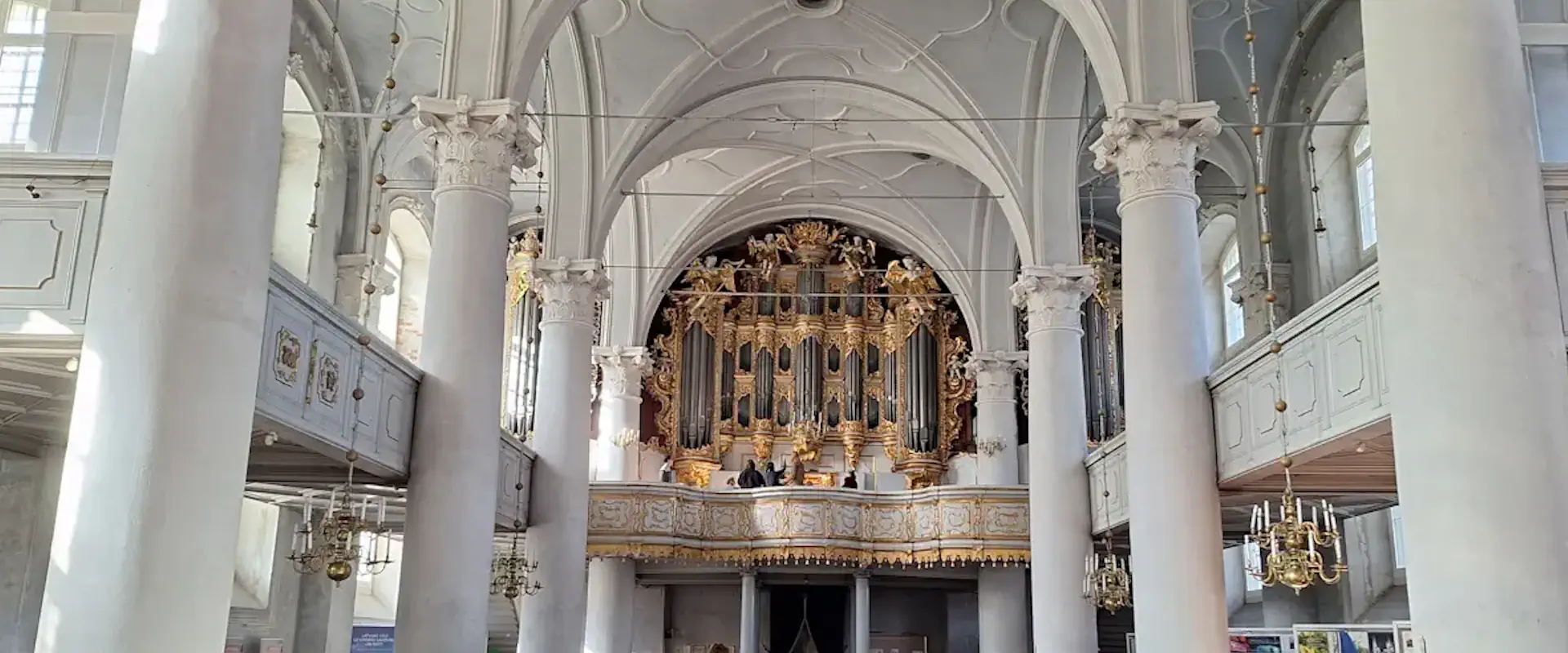

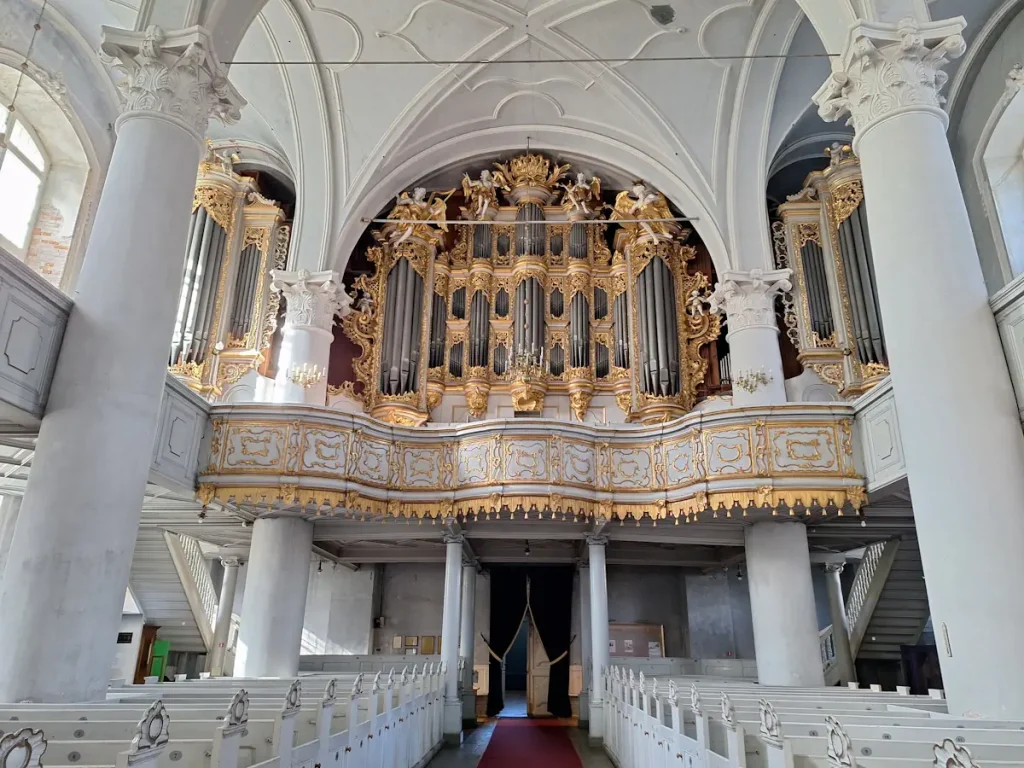
Most claims to have the world’s largest something come with qualifications. This one has several. Holy Trinity Cathedral in Liepāja contains the world’s largest mechanical organ that has never been rebuilt. The distinction matters.
Quick facts — Holy Trinity Cathedral organ
- Built by: the Contius workshop, 19th century — never rebuilt
- Scale: 131 stops, four manuals, 7,000+ original pipes
- Status: World’s largest mechanical organ until 1912; largest unmodified example anywhere
- Best for: Anyone with an interest in organ music, acoustics, or Baltic-German heritage
- Not ideal if: You want fixed tourist opening hours — visiting is tied to the church and concert schedule, not a ticket desk
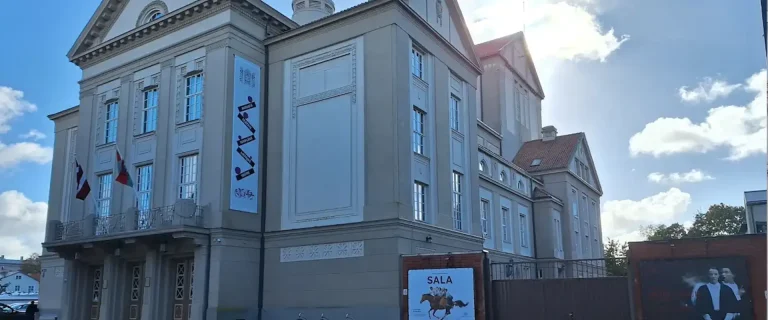
- Getting there: Central Liepāja, a short walk from the Great Amber Concert Hall and the Liepāja Theatre
The instrument was built with 131 stops, four manuals, and over 7,000 pipes. It was the world’s largest mechanical organ of any kind until 1912, when an instrument in Hamburg surpassed it in scale. What Hamburg couldn’t match was what the Liepāja organ has done since: remained unchanged.
In this article
The pipes are original. They were built by the organ-maker Contius — every pipe still functioning, none replaced, none added. It is the only instrument of this scale anywhere that can make that claim.
The Contius Instrument: What Has Not Changed
The organ was built by the Contius workshop — organ-makers whose instruments were among the most technically advanced of their era. The Liepāja organ is the largest surviving Contius instrument, and the only one that remains structurally intact at this scale.
What makes the unmodified status significant is not sentiment. Most organs of this age have been rebuilt, upgraded, or extensively repaired. New pipes replace damaged ones. Mechanical systems are modernised. The instrument people hear is usually a collaboration between the original maker and every organ-builder who touched it since.
The Liepāja instrument has had none of that. What plays now is what Contius built. That is what makes the world record claim specific — and more interesting than most world records.
The Cathedral as a Space
Holy Trinity Cathedral is a Lutheran church and an active congregation. The organ was not built as a heritage exhibit. It was built to be played in a space that was designed for it, and both of those things remain true.
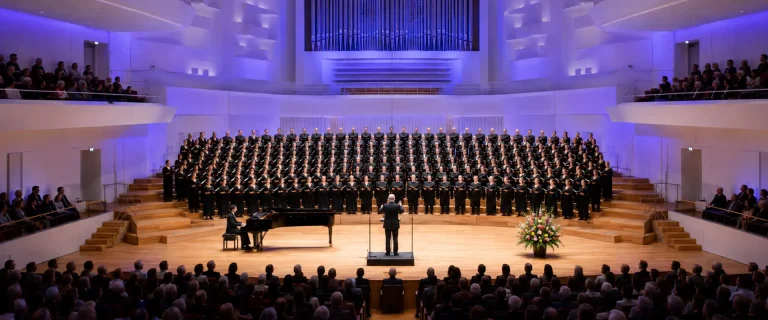
The cathedral sits in central Liepāja, within walking distance of the Great Amber Concert Hall and the Liepāja Theatre. The acoustic of the building — the reverb of stone and height — is entirely different from the engineered vineyard design of the concert hall. These are not competing spaces. They are complementary ones.
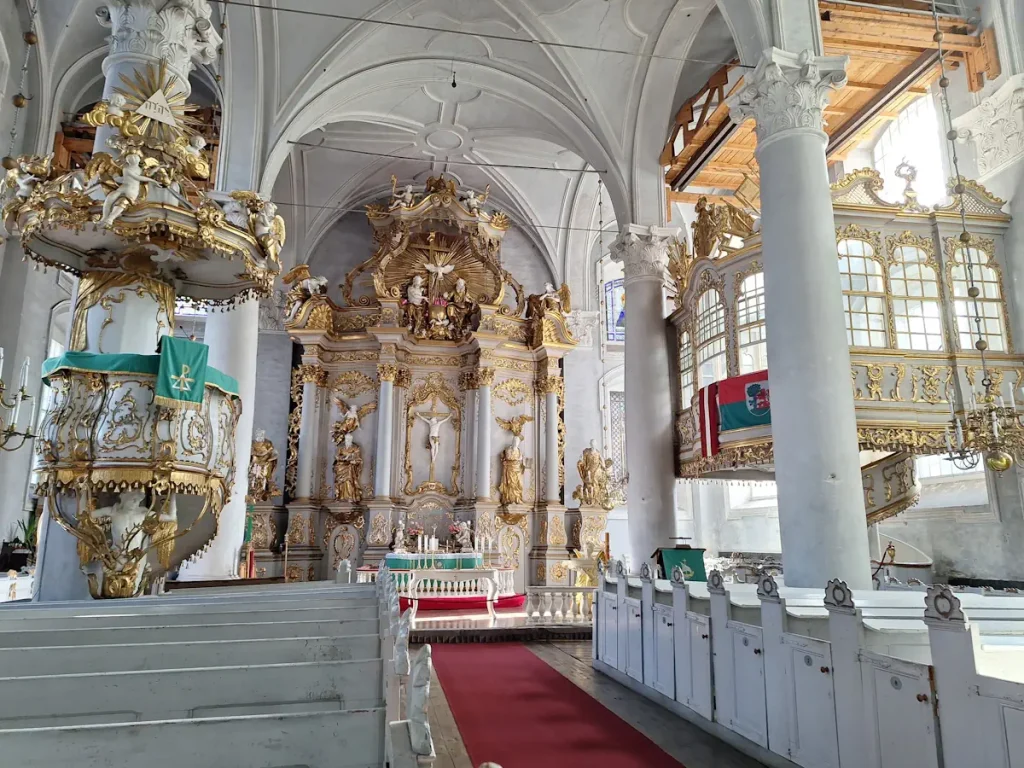
Where the Great Amber was designed to measurable specifications by acoustic engineers, Holy Trinity’s acoustic is what the walls and the centuries produced. You hear both in the same city, within fifteen minutes of each other, and the contrast is as instructive as either one alone.
What (Un)Rest Finds in a 140-Year-Old Instrument
The Liepāja 2027 programme is structured around five thematic strands. One of them — Deliberate Modesty — concerns the relationship between human needs and the health of the environment, between consumption and sustainability. The organ makes a quiet case for this strand.
An instrument that has survived — without modification — across the Russian Empire, the German occupation, the Soviet period, and into the present is not a monument to preservation. It is evidence that some things don’t require an upgrade programme. They require maintenance.
In a cultural year organised partly around resistance to the relentless depletion of resources and the chaotic cycle of consumption, an organ that still has all its original parts is either a coincidence or a provocation. Probably both.
Still Playing
The cathedral holds regular organ concerts and the instrument features in the ECoC 2027 music programme. Visiting performers from across Europe include it in the year’s wider classical programming — not as a curiosity but as a serious concert instrument with a sound that no other venue in Latvia can produce.
Visiting Holy Trinity specifically to hear the organ requires checking the cathedral and festival schedule — performances are tied to the church programme and to ticketed concert events, not to fixed tourist hours. It is worth the planning.
A City That Undersells Its Own Superlatives
Liepāja is Latvia’s third-largest city, with around 70,000 residents on the Baltic coast. The Holy Trinity Cathedral sits in the city centre — within walking distance of the Great Amber Concert Hall, the Liepāja Theatre, and the old port area.
The city holds the oldest symphony orchestra in the Baltic States and the world’s largest unmodified mechanical organ. These are not things Liepāja tends to lead with. They are there if you look.
The Organ’s Place in a 500-Event ECoC Year
Liepāja holds the European Capital of Culture designation in 2027, alongside Évora in Portugal — the two cities share the title, not three; České Budějovice in the Czech Republic is the following year’s host, 2028. The (un)rest programme runs throughout the year with more than 500 events. Listings at liepaja2027.lv.
Visiting the Cathedral Itself
Holy Trinity Cathedral is a short walk from the Liepāja city centre. The cathedral is an active church, and visiting times vary — check locally before planning a visit specifically around organ performances. For accommodation and getting to Liepāja, the practical side is covered elsewhere on this site.