
You’re working out whether you can actually get to Liepāja by ferry— is there a direct sailing, how long does it take, what’s the crossing itself actually like, and what happens at either end once you’re off the ship.
Try to answer that from search results, and you hit contradicting numbers everywhere. Liepāja’s own tourism site says fourteen sailings a week. One major booking aggregator says five. Stena Line and Ferryhopper both say six. Nobody’s lying exactly — most of them are running on stale or third-party data — but booking a 21-hour Baltic crossing off the wrong figure costs you a day of your trip, not a few euros.
Five different sources will give you five different sailing frequencies for this route. Liepāja’s own tourism site says fourteen trips a week. One major booking aggregator says five. Stena Line and the others say six. Nobody’s lying exactly — most of them are just running on stale or third-party data.
The comprehensive guide on getting to Liepāja cover all travel options, not just by sea.
Booking a 21-hour Baltic crossing off the wrong number is the kind of mistake that costs you a day of your trip, not a few euros. So here’s the reconciled version: what actually runs, what it costs, and what to expect once you’re standing at either terminal.
Quick facts
- Route: Stena Line, Travemünde (Germany) to Liepāja
- Crossing time: 20–24 hours, overnight
- Frequency: Every day apart from Sunday
- Fares from: €63 standard seat; €102 shared cabin; €153 private cabin
- Best for: Travellers bringing a car from Germany or Scandinavia, or anyone who’d rather sail overnight than fly and arrange separate transport
- Not ideal if: You can’t spare 21+ hours each way, or you’re looking for a ferry from Stockholm — that route doesn’t currently exist
- Book in advance: Cabins sell out weeks ahead in July and August
What is the ferry to Liepāja?
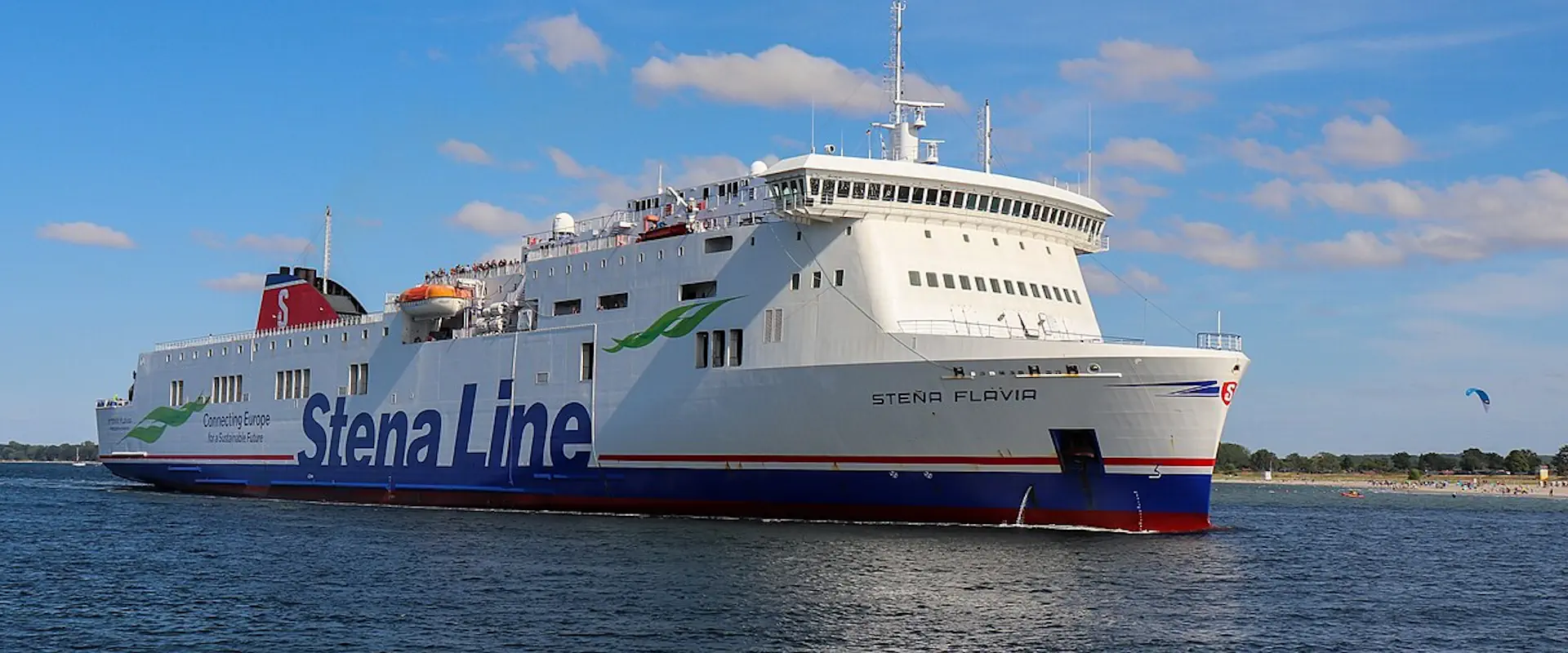
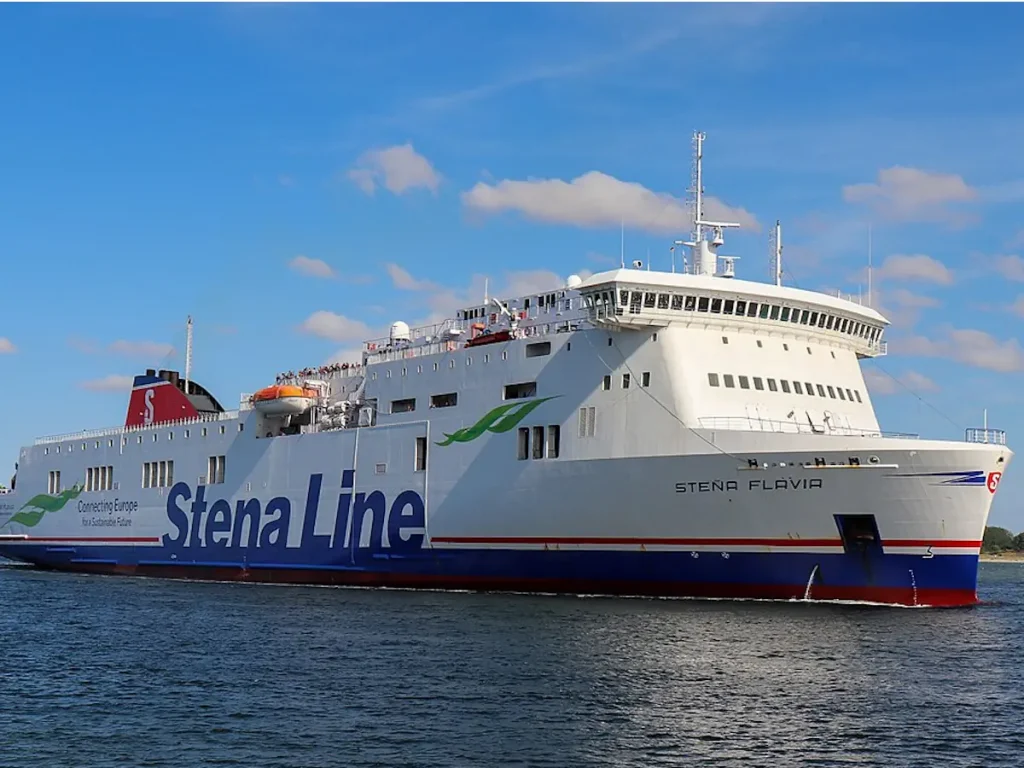
The ferry to Liepāja is a single route: Stena Line’s Travemünde–Liepāja crossing, connecting Liepāja to Germany’s Baltic coast. It runs year-round on the Stena Horizon and Stena Flavia, conventional car ferries with cabins, reclining-seat lounges, and an onboard restaurant. There is no ferry to Liepāja from anywhere else, including Stockholm.
That last point trips people up constantly, because a Stockholm–Liepāja crossing gets searched for far more than it should — no such service exists on any current timetable. If you’re coming from Scandinavia, this Travemünde route (or flying into Riga and continuing overland) is the only sea option.
One small local aside: older Latvian-language material, and some signage, still renders the German port town’s name as Trāvemunde. It’s a transliteration quirk you’ll occasionally spot here, though Travemünde is the form Stena Line and every international source uses, and the one worth searching by.
Liepāja ferry schedule — how often does it run?
Stena Line runs the Travemünde–Liepāja ferry six days a week, year-round, with one sailing per direction most days. Crossing time runs 20 to 24 hours depending on the vessel, season, and conditions. Aggregator sites quote anywhere from five to fourteen weekly sailings — six is the figure that matches Stena Line’s own route data and Ferryhopper’s company-level table.
| Source | Quoted frequency | Reliability |
|---|---|---|
| Stena Line | 6/week | Operator-confirmed |
| Ferryhopper | 6/week | Matches operator |
| Direct Ferries | 5/week | Likely stale |
| liepaja.travel | 14/week | Outdated |
Sailings run year-round, not just in summer — there’s no seasonal suspension. What does shift seasonally is demand: winter crossings book easily a few days out, while July and August sailings, especially cabins, fill weeks ahead. Stena Line official Travemünde–Liepāja schedule and fares page.
How much does the ferry to Liepāja cost?
Standard one-way fares start around €63 per person, with a shared cabin bed from about €102 and a private cabin from roughly €153. Bringing a car adds from around €80–90, a motorbike from about €55, and a campervan from around €210. Prices climb sharply for July and August sailings, so book early if you’re travelling in peak season.
| Fare type | From | Notes |
|---|---|---|
| Standard seat | €63 | Numbered seat, standard lounge |
| Reclining seat, silent lounge | €78 | Quieter, still no bed |
| Shared cabin bed | €102 | Seasonal — books out first |
| Private cabin | €153 | 4-berth, ensuite, TV, air conditioning |
| Car transport | €80–90 | Per vehicle, one way |
| Motorbike | €55 | Per vehicle, one way |
| Campervan | €210 | Per vehicle, one way |
Children under 16 typically travel at a reduced fare, and infants under 3 travel free. These discounts apply automatically at booking rather than needing a separate code.
Cabins, reclining seats, and sleeping on the crossing
Yes — the crossing runs overnight, and most travellers sleep in a cabin rather than a reclining seat. Options range from shared and standard inside or outside cabins to deluxe cabins with a sea view, plus pet-friendly and accessible cabins. Budget travellers can book a numbered reclining seat in a standard or silent lounge instead.
- Shared cabin bed — a berth in a 4-person cabin, cheapest way to get a proper bed
- Standard inside/outside cabin — private cabin, ensuite bathroom, TV, air conditioning
- Deluxe cabin — more space, sea view, tea and coffee facilities
- Accessible cabin — adapted for reduced mobility, request at booking
- Pet-friendly cabin — the only option if you’re travelling with an animal
If you’d rather skip the overnight leg entirely, the hub page on getting to Liepāja covers the alternative routes — train and bus from Riga both run in around three hours.
Is the overnight ferry the right way in for you?
The Travemünde ferry suits travellers already in Germany or Scandinavia, especially anyone bringing a car, motorbike, or campervan they want on the ground in Latvia. It’s the only direct route in from that side of Europe. It’s not the right choice if you’re short on time — 20+ hours each way is a real commitment, not a short hop, and it’s worth comparing against flying to Riga or Palanga and continuing overland instead.
What catches people out on the ferry to Liepāja
Two things trip travellers up: cabins selling out weeks ahead in July and August, and underestimating how choppy the open Baltic gets compared with a short island-hopping ferry. Book your cabin as soon as your dates are fixed rather than a few weeks out, and pack seasickness remedies if you’re at all prone to it — this is a genuinely open sea crossing, not a sheltered strait.
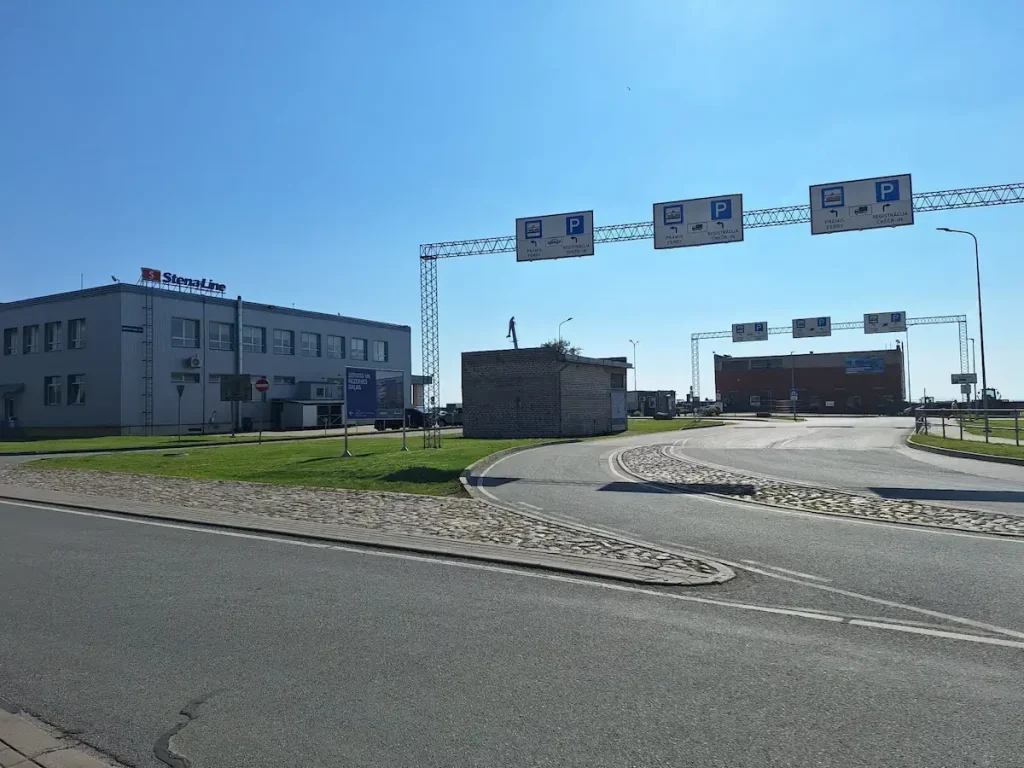
Arrive with margin, too. Foot passengers should allow at least an hour before departure at Travemünde; drivers should plan for closer to two, since vehicle boarding takes longer than walking on.
Getting to the ferry terminal in Travemünde
Ferries to Liepāja depart from the Skandinavienkai terminal in Travemünde, about 20 km from Lübeck city centre. By car, follow the A1 towards Lübeck, then take the exit for Travemünde/Skandinavienkai and follow the signs to the port. By train, a regional service from Lübeck Hauptbahnhof to Lübeck-Travemünde Skandinavienkai takes about 20–25 minutes, with the station a short walk from the terminal.
- By car: A1 to Lübeck, exit for Travemünde/Skandinavienkai
- By train: Regional service from Lübeck Hauptbahnhof, ~20–25 min
- By bus: Local lines 30 or 31 from central Lübeck, ~40–50 min
- By taxi: ~20–25 min from downtown Lübeck
Deutsche Bahn regional timetable.
Arriving at Liepāja port — getting into the city
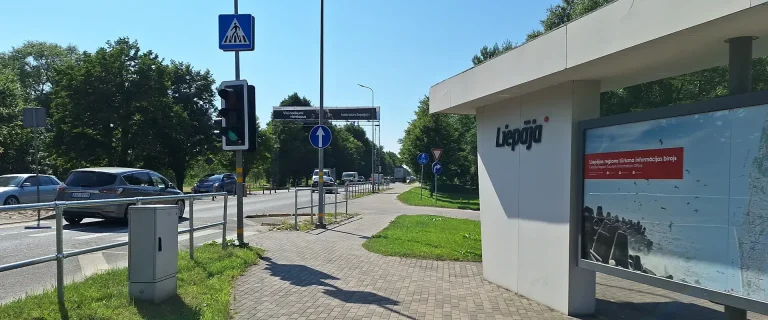
The Liepāja terminal sits at 14A Brīvostas iela in the city’s northern district, under 2 km from the railway station and about 3 km from the Old Town. On foot or by public transport, walk to Oskara Kalpaka and get the Nr. 10, 11, or 22 bus from the Piltenes iela stop. Taxis routinely wait at the terminal exit for a direct transfer into the centre.
Drivers heading onward have it simpler: the A9 runs east to Riga, and the A11 runs south towards Lithuania, both reachable directly from the port road. If your trip is timed around Liepāja 2027 — the city’s European Capital of Culture year — this is also the arrival point you’ll use, so it’s worth checking the 2027 programme before you fix your sailing date.
For what to do when you arrive, the guide to Things to Do in Liepaja lists all of the attractions in this Baltic city.
Bringing a car, bike, or pet on the ferry
Cars, motorbikes, and campervans all travel on the Travemünde–Liepāja ferries, with car decks on both the Stena Horizon and the Stena Flavia. Bicycles are carried too. Pets are allowed but must travel in a pet-friendly cabin — there are no kennels on board, and pets can’t stay in a vehicle on the car deck during the crossing.
If you’re bringing a pet, you’ll need its passport, microchip ID, and a valid rabies vaccination record, plus supplies for a journey that runs the better part of a day.
Is there a ferry from Liepāja to Sweden?
No — Liepāja itself has no direct ferry to Sweden or anywhere beyond Travemünde. Travellers after a Sweden connection generally head to one of two nearby ports instead:
- Ventspils, up the coast, where Stena Line sails direct to Nynäshamn near Stockholm
- Klaipėda, across the border in Lithuania, where DFDS runs to Karlshamn.
Locally, this is the route most people actually use when Stockholm is the real destination.
Neither is a same-day swap for the Liepāja crossing — both mean travelling to a different port first — but they’re the genuine answer for anyone who’s landed on this page looking for a Stockholm sailing that doesn’t exist from Liepāja.
- Ventspils–Nynäshamn (Stena Line): direct to the Stockholm area from Ventspils, roughly a two-hour drive up the coast from Liepāja. Official Stena booking page for Ventspils–Nynäshamn.
- Klaipėda–Karlshamn (DFDS): 9 sailings a week, a 13-hour overnight crossing (departs Klaipėda 21:00, Karlshamn 19:00 local), from around €58–71pp — sailing from Klaipėda, about two hours south of Liepāja by bus. Official DFDS booking page.
What documents do you need for the ferry to Liepāja?
The crossing is an international border crossing between Germany and Latvia, so EU and Schengen citizens need a national ID card or valid passport, and non-EU citizens need a valid passport and, depending on nationality, a visa. Drivers bringing a car also need their licence, plus vehicle registration and insurance documents.
Frequently asked questions
Is there a ferry to Liepāja?
Yes — Stena Line runs a direct ferry between Travemünde, Germany, and Liepāja, year-round. It’s the only ferry route into Liepāja; there is no service from Stockholm or anywhere else.
Which company runs the ferry to Liepāja?
Stena Line operates the route, using two conventional car ferries, the Stena Horizon and the Stena Flavia. Both carry cabins, reclining-seat lounges, a restaurant, and car decks for vehicles.
How long is the ferry crossing to Liepāja?
The crossing takes 20 to 24 hours, depending on the vessel, season, and conditions. It runs overnight, so most travellers book a cabin or a reclining seat rather than trying to stay awake the whole way.
How much does the ferry to Liepāja cost?
Standard fares start around €63 per person, with a shared cabin bed from about €102 and a private cabin from roughly €153. Bringing a car adds from around €80–90 one way, and prices rise sharply for July and August sailings.
Should I book a cabin or a reclining seat?
Book a cabin if you actually want to sleep — the crossing runs overnight and a reclining seat, while cheaper, means sitting upright for 20+ hours. Shared cabin beds are the budget middle ground between the two.
Can I bring a car on the ferry to Liepāja?
Yes — both ferries on this route have car decks, and cars, motorbikes, and campervans are all carried. Prices start from around €80–90 for a car, €55 for a motorbike, and €210 for a campervan, one way.
How far in advance should I book a cabin in July or August?
Book as soon as your travel dates are fixed. Cabins on this route sell out weeks ahead of the sailing date in peak summer, and waiting until a few weeks before departure often means settling for a reclining seat instead.
How do I get from the Liepāja ferry terminal into the city without a car?
Take bus 10 or 11 to the Silku iela stop, then walk 25–30 minutes to the terminal, or use one of the taxis that routinely wait at the terminal exit for a direct transfer into central Liepāja.
Picture: “Stena Flavia” in Travemünde — Karl-Heinz Hazlerick, CC BY-SA 4.0 via Wikimedia Commons.