
Liepāja has a concert hall coloured like amber and shaped, oddly, like a traditional Latvian woman’s hat. It has a theatre that’s been running since before the First World War. Whether either is worth building into a short trip is harder to answer than it should be.
Quick facts
- Venues covered: 3 — concert hall, theatre, cathedral
- Location: All within a 10-minute walk of Liepāja city centre
- Time needed: 1–2 hours per venue, or a half-day for all three
- Best for: Music and theatre fans, architecture and heritage interest
- Not ideal if: You need English-language performances — programming is mostly Latvian
- Entry: Cathedral free to view; concert and theatre tickets from around €10
- Book ahead for: Great Amber concerts by touring orchestras or well-known soloists — popular dates sell out weeks in advance
Most of what’s written about these places is thin. Press-release language, generic praise, nothing about what they’re actually like to visit or whether the detour’s worth it.
They’re permanent institutions, not seasonal attractions. This guide covers what each one actually is, what it’s like inside, and which one suits your trip.
What are Liepāja’s cultural venues?
Liepāja’s cultural scene runs through three permanent venues. Great Amber Concert Hall (Lielais Dzintars) is home to the oldest symphony orchestra in the Baltic states. Liepāja Theatre (Liepājas teātris) is Latvia’s oldest continuously operating professional stage. Holy Trinity Cathedral (Svētās Trīsvienības katedrāle) holds a mechanical organ that’s never been rebuilt.
All three run year-round, independent of any single event or season. They sit within a 10-minute walk of each other in the city centre — easy to combine two or three in one afternoon.
Great Amber Concert Hall
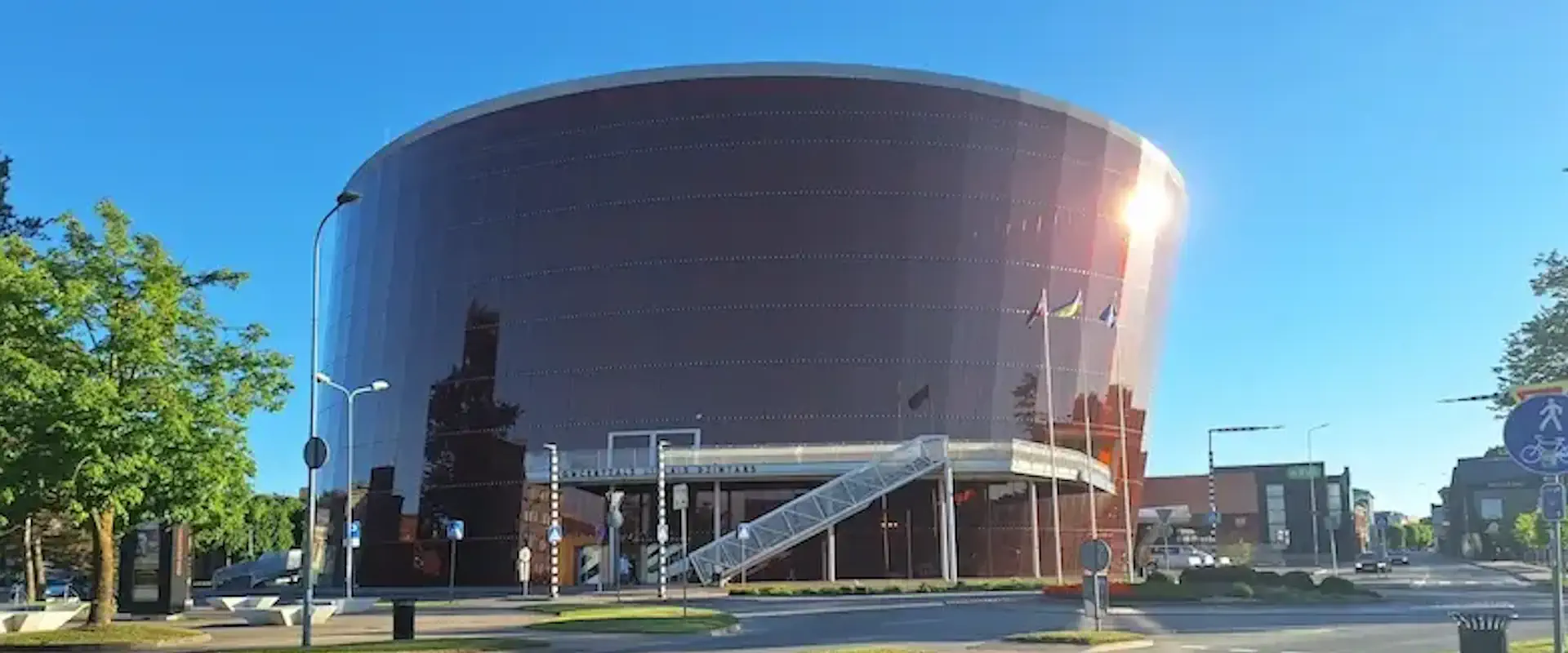
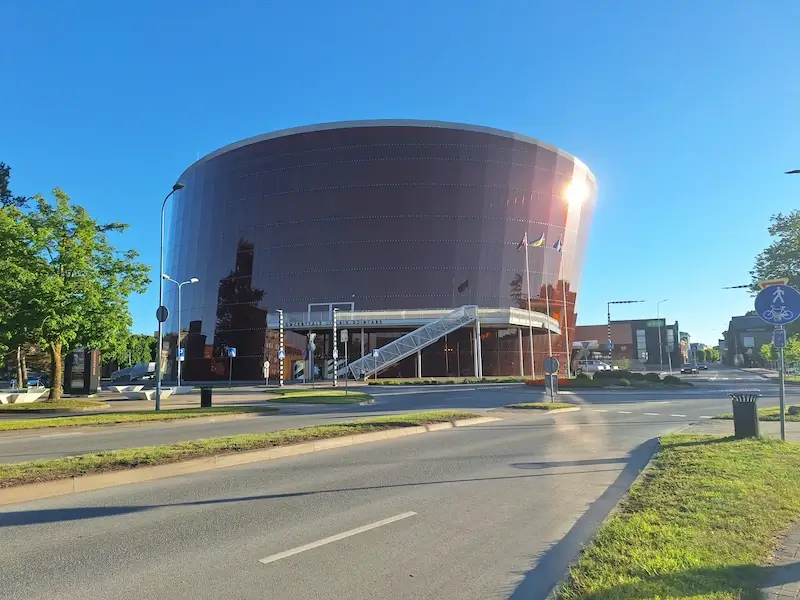
Great Amber Concert Hall (Lielais Dzintars) opened in 2015 — 119 years after Liepāja’s city council first decided it needed one. It’s the permanent home of the Liepāja Symphony Orchestra (Liepājas Simfoniskais orķestris), the oldest orchestra in the Baltic states, founded in 1881.
For the complete guide, my article on the Great Amber Concert Hall in Liepāja describes the venue in more detail.
It houses three performance spaces, each a different size.
| Hall | Capacity | Typical use |
|---|---|---|
| Great Hall | 1,000 | Orchestral concerts, major touring acts |
| Chamber Hall | 200 | Smaller ensembles, recitals |
| Experimental Stage | 120 | Contemporary and experimental work, run by Liepāja Theatre |
Austrian architect Volker Giencke gave the building its amber-coloured glazing as a nod to the material found along this stretch of coast — that part’s documented, straight from the architect’s own project notes. The cone shape underneath it is a different story. Locals will tell you it echoes a traditional Latvian woman’s hat, not the amber the building’s named after.
The acoustics use a terraced “vineyard” principle, the same approach behind some of the world’s best concert halls.
The annual “Stars in Amber” series brings international soloists to the Great Hall. Before the building existed, few had reason to route through Liepāja at all.
No concert on? The building’s still worth seeing from outside. The amber glazing shifts with the light — flat and dense under grey Baltic cloud, warm when the afternoon sun catches it from the west.
Tickets for Great Amber concerts are sold through Biļešu Paradīze. Popular dates for touring orchestras and well-known soloists sell out weeks ahead — book earlier than you would for a typical regional venue.
The official performance schedule for the Great Amber concert hall.
Liepāja Theatre
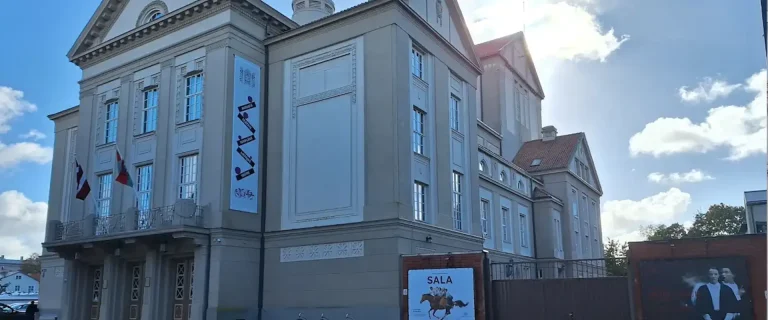
Liepāja Theatre (Liepājas teātris) has staged professional drama in the same building since 1907, making it Latvia’s oldest continuously operating professional theatre — a claim it holds by a real margin, not a marketing one.
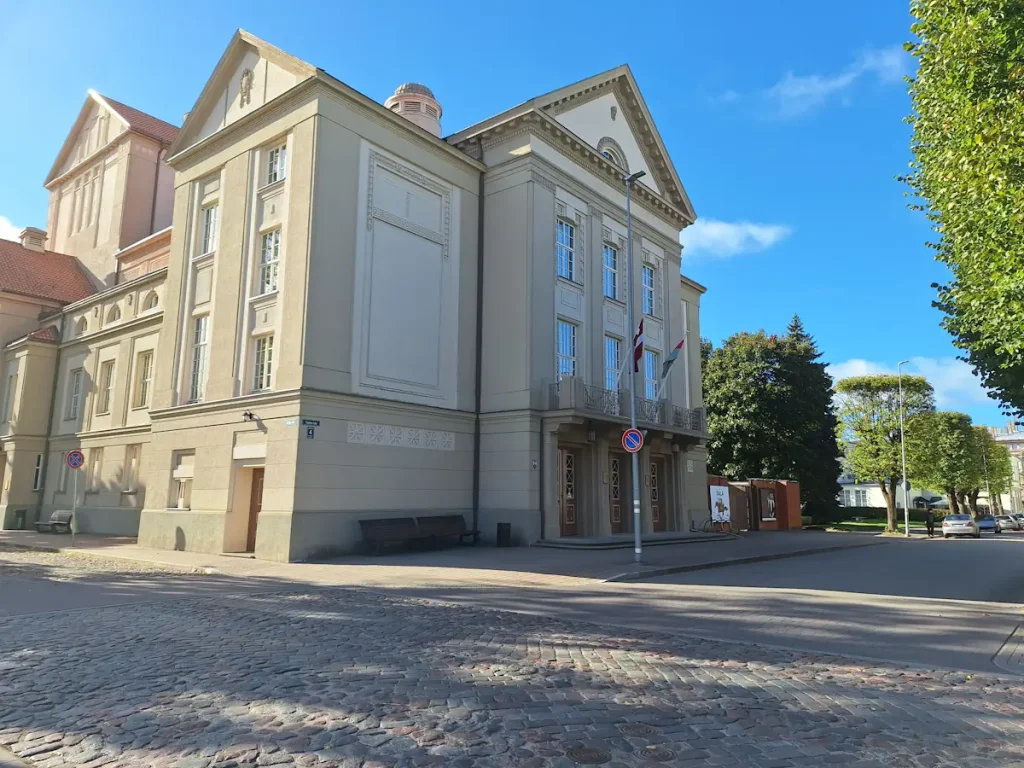
The building is Art Nouveau, one of more than 70 surviving examples of the style in Liepāja. It’s kept its original staircases and decorative detail, and the proportions of a room built for performance rather than adapted to it.
What matters more than the age is the continuity. The same company has staged Latvian-language drama through two World Wars, Soviet occupation, and independence — no gap that would make it a revival rather than a survival.
For part of the last century, the building also housed the Liepāja Opera, before that moved on.
The theatre now runs a full season — Latvian-language work, visiting productions, and the occasional international collaboration. It also operates the Experimental Stage at Great Amber.
It isn’t the centrepiece of Liepāja’s cultural scene the way Great Amber or Karosta tend to be. That’s the right position for an institution that’s been doing the job since 1907 without needing anything else to justify it.
The official schedule for finding out what’s on at Liepāja Theatre.
Holy Trinity Cathedral
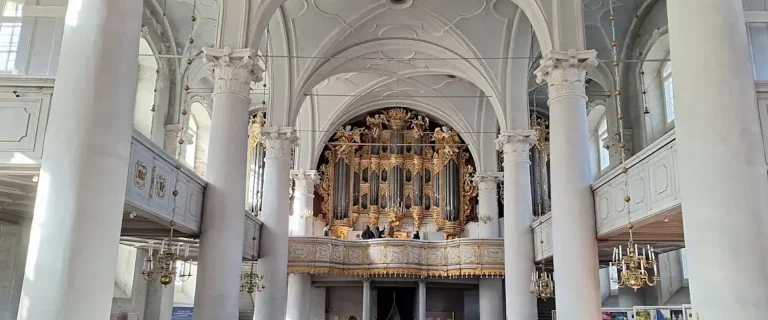
Holy Trinity Cathedral (Svētās Trīsvienības katedrāle) holds the largest mechanical organ in the world that has never been rebuilt. Over 7,000 original pipes, built by organ-maker Contius in the nineteenth century, still in working order.
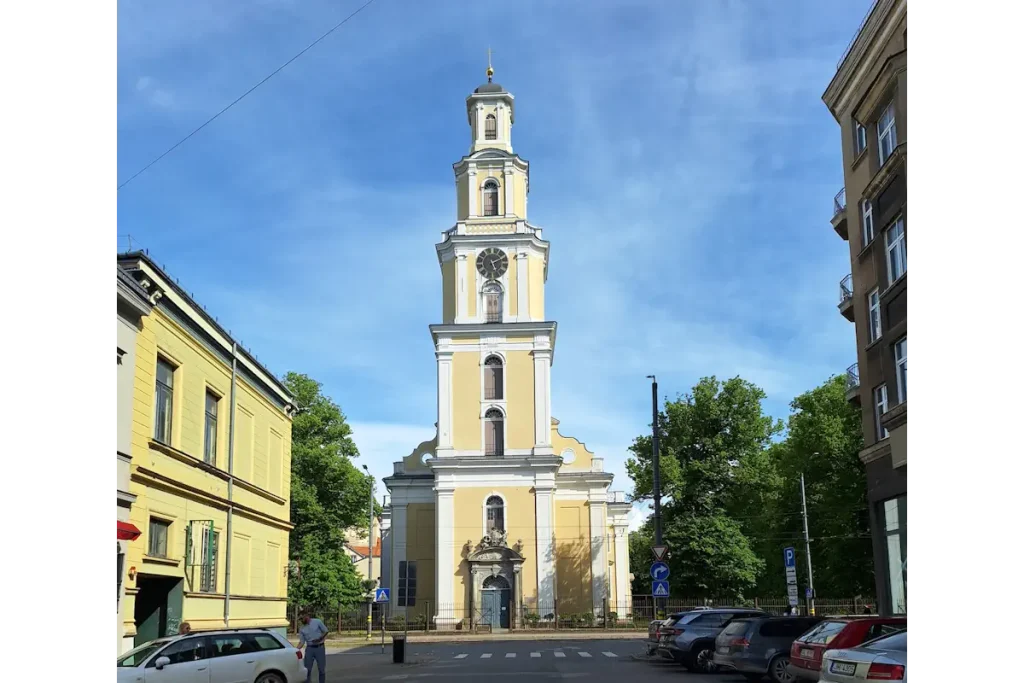
It held the title of the world’s largest organ outright until 1912, when an instrument in Hamburg overtook it.
What sets it apart from a museum piece is that it’s still played. The cathedral is an active church, not a preserved exhibit — the organ is heard during services and occasional scheduled recitals, not on demand.
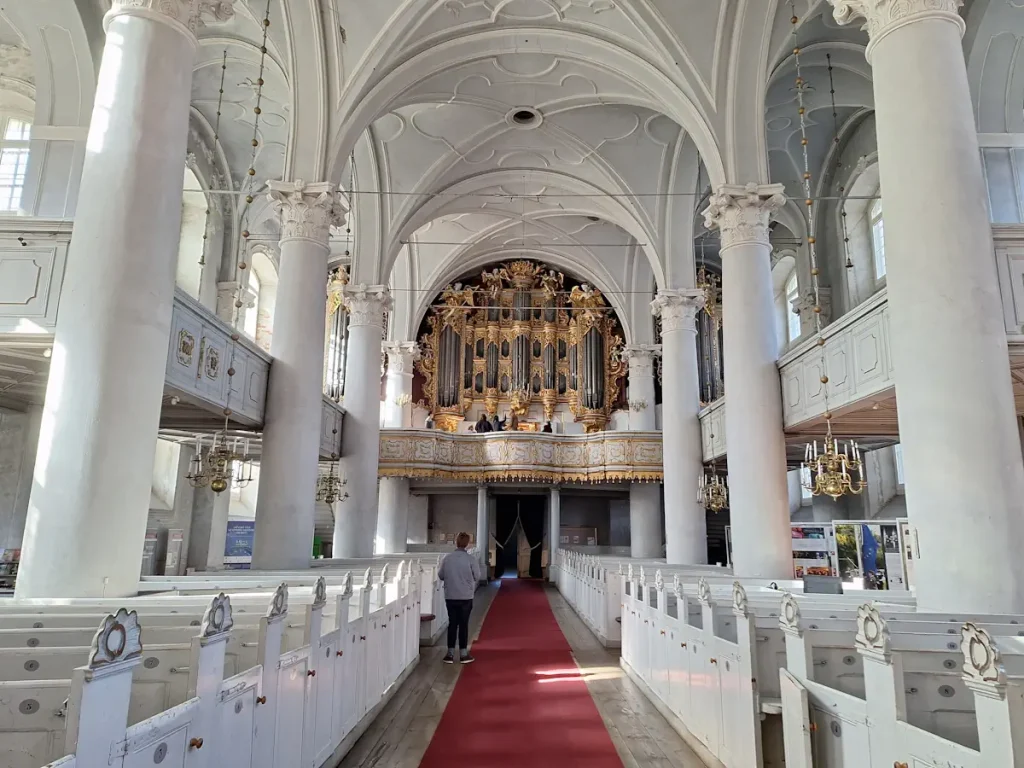
No replacement pipes, no modern additions. A 140-plus-year-old instrument still doing its original job says more than any plaque could.
Here’s what’s on at the Holy Trinity Cathedral in Liepāja.
Which venue fits your trip
Great Amber suits visitors happy to plan around a specific concert, or who want the building itself as a sight even without a ticket. Liepāja Theatre suits Latvian speakers, or visitors comfortable following a performance without English subtitles, who want a working theatre rather than a heritage display.
Holy Trinity Cathedral suits anyone passing through the centre. No ticket needed to see the organ, only to hear it played, and it fits into a short stop between other things.
If you’re only picking one and music isn’t the draw, the cathedral asks the least of your schedule. If a specific concert or production is the reason for your trip, plan around it and book early.
What to know before you book
Great Amber and Liepāja Theatre tickets are sold through Biļešu Paradīze. Popular dates — touring orchestras, well-known productions — sell out weeks ahead, so book earlier than you would for a typical regional venue.
Programming at both is mostly in Latvian, with limited English signage or surtitles. Check the specific event if language matters to you.
The cathedral organ is only heard during services or scheduled recitals, not on request. Confirm timings before planning a visit around it specifically.
None of the three require advance planning just to see the buildings from outside or step into the cathedral — the booking pressure only applies to specific performances.
Beyond the three: Karosta’s cultural layer
Liepāja’s cultural infrastructure isn’t limited to these three buildings. Karosta, the former Soviet naval district covering a third of the city, has its own active arts scene — venues like the K@2 Culture and Information Centre, alongside its more familiar dark-tourism draw at Karosta Prison.
It’s a genuinely different kind of cultural visit — outdoor, historical, unpolished. Worth treating as a separate trip rather than folding into an afternoon of concert halls and theatres.
Read the full Karosta district guide for the history and orientation, or go straight to the Karosta Prison guide if the dark-tourism angle is what’s pulling you there.
Frequently asked questions
Is Great Amber Concert Hall worth visiting if there’s no concert on?
Yes — the building itself is a reason to visit. Volker Giencke’s amber-glazed design reads differently depending on the light, and the interior is open during box office hours even without a ticketed event. Guided tours of the halls are also available; check current times with the venue directly.
What language are Liepāja Theatre productions in?
Liepāja Theatre performs in Latvian, and English surtitles aren’t standard. Visiting international productions occasionally offer more language support — check the specific listing before booking if you don’t speak Latvian.
How do I hear the Holy Trinity Cathedral organ played?
The organ is heard during church services and occasional scheduled recitals, not on request. *[CHECK: confirm current recital schedule]* Visitors can view the cathedral and organ outside of performance times, but hearing it play takes some timing.
Do I need to book Great Amber tickets in advance?
For popular dates, yes — concerts by touring orchestras and well-known soloists can sell out weeks ahead. Tickets are sold through Biļešu Paradīze. Less prominent Chamber Hall or Experimental Stage events tend to have more availability closer to the date.
Is it better to visit these venues in summer or winter?
All three run year-round, so there’s no wrong season. Great Amber’s programme is busiest October to May, in line with the classical concert season; summer brings more visiting productions and one-off events. The cathedral and theatre building are worth seeing regardless of when you’re in Liepāja.
How much time should I set aside to visit all three?
Budget a half-day if you want to see all three without attending a performance — they’re within a 10-minute walk of each other in the city centre. Add 2–3 hours if you’re attending a concert or a theatre production at either venue.