
Quick facts — the (un)rest programme
- Runs: April – December 2027
- Scale: 500+ events across Liepāja, South Kurzeme and Kuldīga
- Structure: Five thematic strands
- Best for: Anyone trying to understand why a particular event is programmed the way it is
- Not ideal if: You want a simple events calendar — this is the concept behind the calendar, not the calendar itself
- See also: full listings at liepaja2027.lv
Most European Capital of Culture programmes name themselves something aspirational. Words like rise, together, bloom — names that smooth over whatever is complicated about the city in question and offer something more comfortable to the European jury. Liepāja chose (un)rest. The brackets are not decorative.
The (un)rest programme runs from April to December 2027, across more than 500 events spanning Liepāja, South Kurzeme, and the Kuldīga region. It is structured around five thematic strands, each addressing questions that are specific to Liepāja while reaching toward broader European concerns.
In this article
The name came out of a genuine reckoning with what Liepāja actually is — a city that has never fully settled, that carries occupation and transformation and loss in its urban fabric, and that has been asked to present itself to Europe for a year. The programme takes the position that the unsettledness is the thing worth presenting.
Where (Un)Rest Comes From
Liepāja’s bid for the European Capital of Culture designation was built around the concept of the city’s relationship with its own turbulent history. Not as a heritage tourism angle — as a living condition. The city sits on the edge of the Baltic with a Soviet naval base at one end and a German imperial port at the other, and the people living between them have been navigating that legacy for thirty-five years since independence.
The (un)rest concept emerges from that navigation. It asks what it means to be a European city that has been genuinely unsettled — not metaphorically, but politically, environmentally, economically — and what culture can do when it takes that unsettledness seriously rather than resolving it into something more palatable.
The five thematic strands each address a different dimension of this. One strand examines authenticity in the face of globalisation — what Liepāja is when it is not performing itself for visitors. Others engage with community participation, environmental damage, European identity, and the paradoxes that define a city of this size carrying this much history.
What (Un)Rest Looks Like Across 500 Events
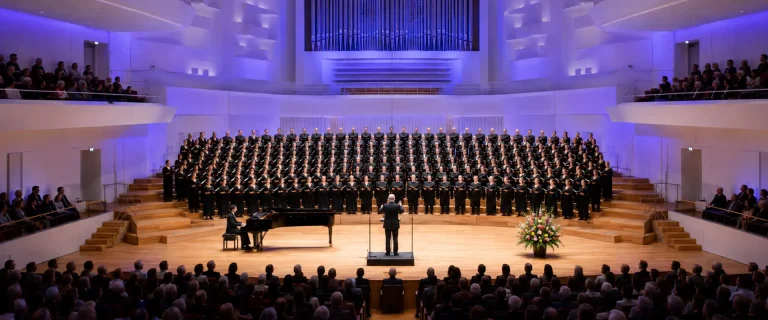
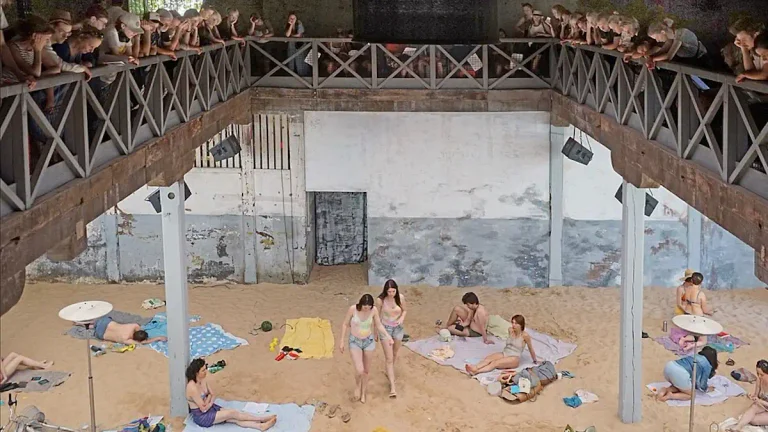
The programme’s range is deliberately wide. At the high-profile end: Sun & Sea (Marina) — the Lithuanian opera-performance that won the Golden Lion at the Venice Biennale — plays Liepāja’s Great Amber Concert Hall in April 2027. Europa Cantat, one of Europe’s largest amateur choir festivals, arrives in August with over 3,000 participants.
Alongside these: City Symphony, an outdoor concert performance under the artistic direction of film director Matīss Kaža. Wind Symphony, an indoor concert ceremony directed by Laura Groza. A new musical work commissioned from composer Ēriks Ešenvalds — one of Latvia’s most internationally recognised composers — written specifically for the ECoC year. The Liepāja Symphony Orchestra’s own Opera by the Sea runs across two dates, July and October.
Then the community layer: twelve projects backed through the (un)rest participatory funding strand, many of them rooted in Karosta, the former Soviet naval base on Liepāja’s northern edge. Art residencies. Youth programmes. Brass band workshops at the Karosta Music School. The international concert series Stars in Amber at Great Amber, introducing world-class musicians who have never previously performed in the city.
What (Un)Rest Says About Liepāja — and Whether It Can Hold
A programme this large, built around a single serious concept, faces an obvious tension. Five hundred events is a lot to hold under any thematic frame. The risk with (un)rest is the same risk any ECoC programme runs: that the concept becomes a label applied to whatever was already planned, rather than a logic that genuinely shapes the choices.
The evidence so far suggests Liepāja has mostly avoided this. The placement of Sun & Sea — a work about climate anxiety and the inadequacy of leisure — in the programme’s opening weeks is not a random booking. The decision to concentrate significant activity in Karosta rather than polishing the city centre for visitors is a programmatic argument, not an oversight.
(Un)rest is not obviously a marketing concept. It does not promise transformation or joy or European unity. It promises something more useful: a year of culture that knows where it is.
About Liepāja
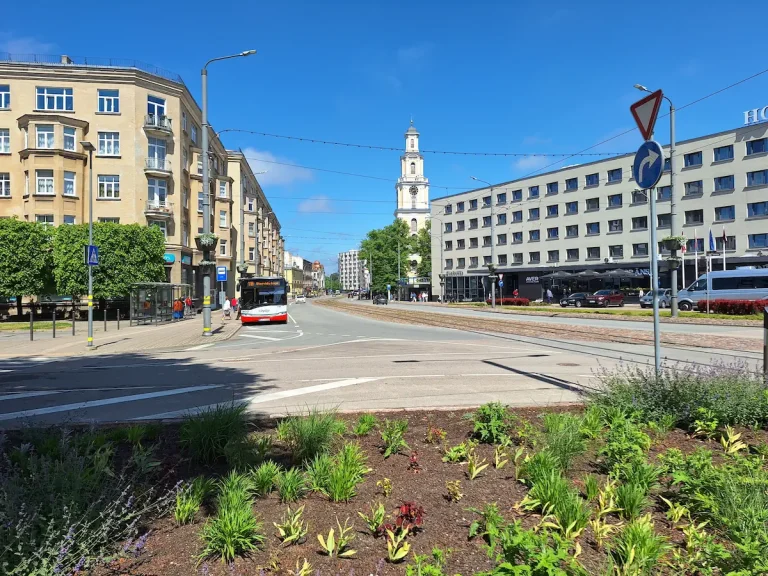
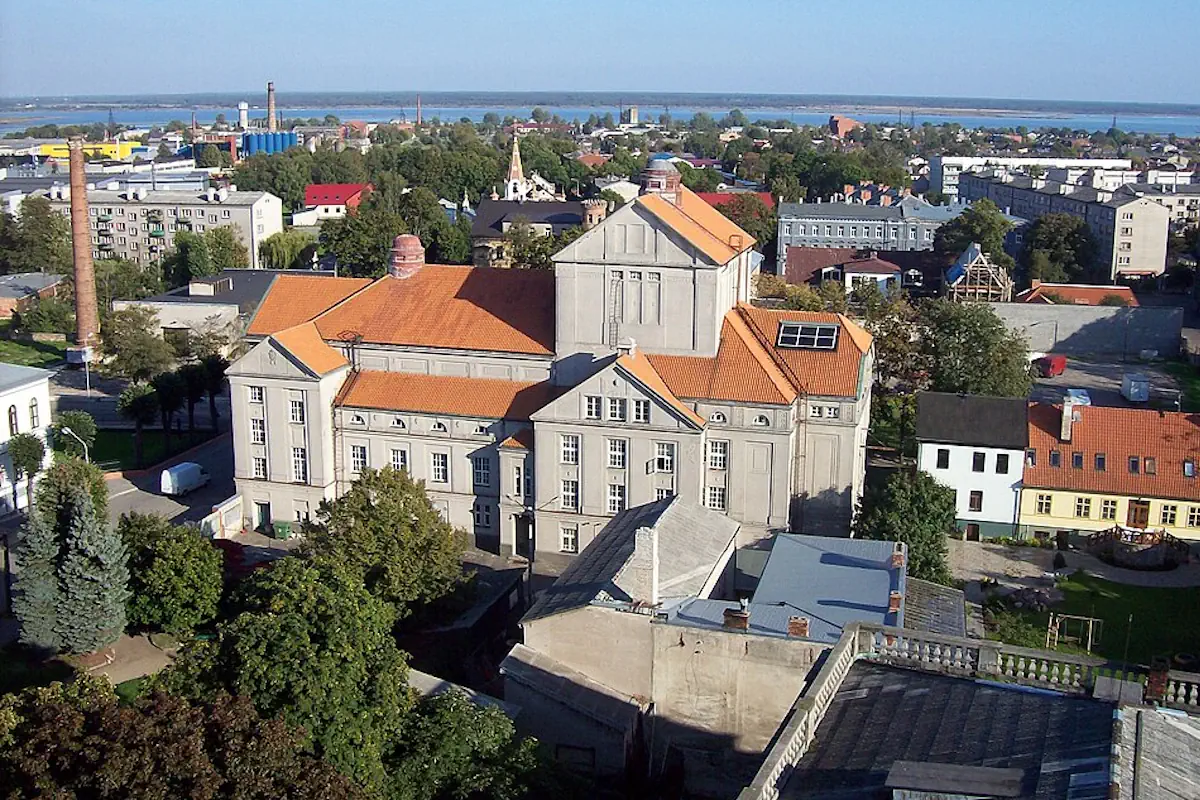
Liepāja was Libau — a cosmopolitan Baltic port under the Russian Empire, with a German-speaking merchant class and cultural institutions that survived, improbably, into the 20th century. Then came the First World War, then Soviet occupation, then a closed naval base that consumed the northern third of the city for fifty years. The layers are still readable in the architecture, the demographics, the gaps in the urban fabric.
Latvia’s third city now has around 70,000 residents. It sits between the Baltic Sea to the west and Liepāja Lake to the east, with the Kanāls cutting through the north. The Liepāja Symphony Orchestra was founded in 1881 — older than the Latvian state, older than the modern concept of Latvia itself. A theatre tradition runs back to 1907.
Liepāja is also what Latvians call the rock capital: a city that has produced a disproportionate number of the country’s rock bands without obvious explanation. The symphony and the rock music coexist without friction because both grew out of the same city — one that has always had more cultural life than its size would predict.
Liepāja and the European Capital of Culture
The European Capital of Culture designation, awarded by the European Commission, invites cities to make their cultural identity visible on a European scale for a single year. In 2027, the title is shared by Liepāja, Évora in Portugal, and České Budějovice in the Czech Republic. The interesting question is not what the designation does for Liepāja, but what Liepāja does with it. The (un)rest programme is the answer so far.
Visiting Liepāja for the (Un)Rest Programme
The 2027 programme opens on 22 January in Kuldīga and South Kurzeme, with Liepāja’s own opening following on 23 January. Events continue through to December. Different strands suit different times of year — summer for outdoor and participatory work, spring and autumn for the major concert programme at Great Amber.
Liepāja is three hours from Riga by road or bus — see getting to Liepāja for route options. For accommodation and everything else you need to plan around the 2027 programme, this site has the practical side covered.