
From 9 to 15 August 2027, Liepāja will host Europa Cantat — one of Europe’s largest gatherings of amateur choral musicians. More than 3,000 singers, conductors and enthusiasts are expected. In a city of 67,000 people, that ratio is worth sitting with.
Quick facts — Europa Cantat 2027
- Dates: 9–15 August 2027
- Venue: Great Amber Concert Hall, plus churches and outdoor spaces across the city
- Scale: 3,000+ singers, conductors and enthusiasts from 30+ countries
- Best for: Choral music fans, and anyone curious what a city of 70,000 does when 3,000 visiting choristers arrive
- Not ideal if: You want peace and quiet — August is already Liepāja’s busiest month
- Book ahead: August is peak summer on the Baltic coast — sort accommodation early
The festival is organised by the European Choral Association and has been running across European cities for decades. It is not a competition. There are no winners. It is a week of workshops, rehearsals, concerts and masterclasses built on the premise that amateur choral singing deserves to be taken seriously.
Europa Cantat is returning after a gap since its last edition, and it is landing in Liepāja during the city’s year as European Capital of Culture. That combination is not accidental. The festival fits the (un)rest programme’s logic: participatory, European in scope, community before spectacle.
What Europa Cantat Is — and How It Works
The format is deliberately non-hierarchical. Participants attend workshops and masterclasses during the day, perform in concerts in the evenings, and come together for large-scale choral events that draw the whole group into one space.
The participants are amateur singers. That is the point, not a caveat. Europa Cantat was built on the argument that choral music belongs to everyone — that the distance between professional concert performance and community singing is not fixed, and that the right festival can close it.
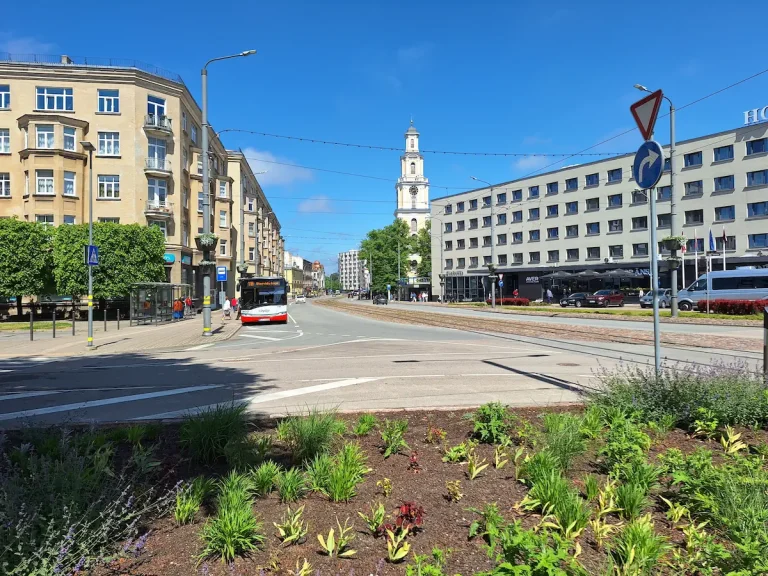
Previous editions have taken place across Europe: Pécs, Tallinn, Tours, Utrecht. The festival typically draws participants from thirty or more countries. A week in Liepāja will mean its normal acoustic life — wind off the Baltic, the trams on Graudu Street — layered over with choral sound in dozens of languages.
Why Liepāja Has the Cultural Infrastructure for This
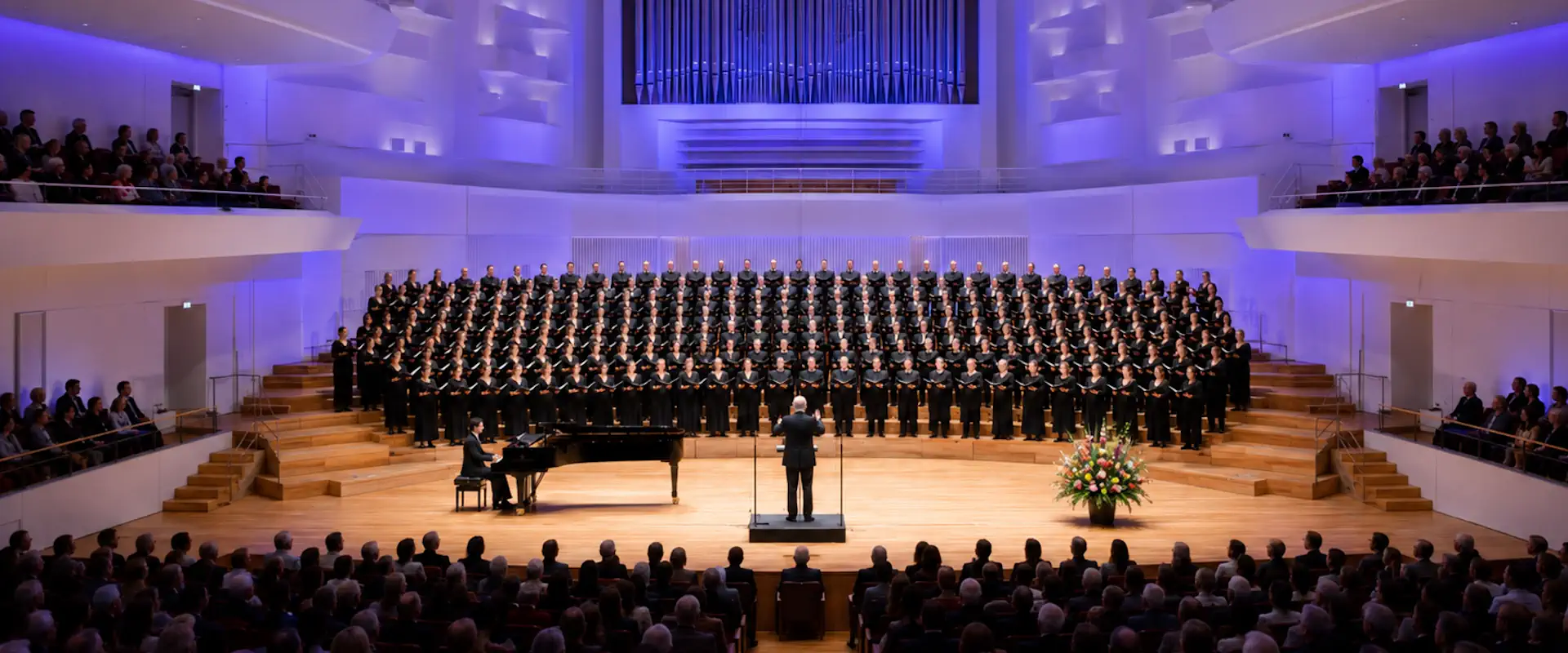
The anchor venue is the Great Amber Concert Hall — Lielais Dzintars — on the southern edge of Liepāja’s centre. Opened in 2015 and designed by Austrian architect Volker Giencke, it seats around 1,000 in its main hall and was built as a concert venue of European standard.
Before Lielais Dzintars opened, Liepāja had no purpose-built space that could credibly host events at this scale. The ECoC bid was partly constructed around the hall’s existence — a city with a world-class acoustic venue and a cultural ambition larger than its size could now make a serious argument for European designation.
Europa Cantat typically spreads across multiple venues: churches, public squares, smaller halls. Liepāja has all of these — the Trinity Cathedral, St Anne’s Basilica, the open spaces of the old town.
How Europa Cantat Fits the (Un)Rest Programme
The (un)rest programme is structured around five thematic strands addressing both regional and European concerns. Genuine participation — not the performative kind — is one of its core commitments. Europa Cantat, which by design puts amateur singers at the centre, is a direct expression of that.
Most major cultural events position the audience as receivers — people who attend, watch and leave. Europa Cantat inverts this. The participants are the event. For a programme named (un)rest — built around productive discomfort, around not settling for easy cultural answers — this is the right kind of event.
Liepāja has a strong amateur choral tradition of its own. The city’s musical reputation is usually framed around its professional orchestra, but community singing runs deeper than that. The Latvian Song and Dance Festival, which draws tens of thousands of performers every five years, is the most visible expression of this.
Europa Cantat lands in fertile ground.
A City That’s Been Singing Since 1881
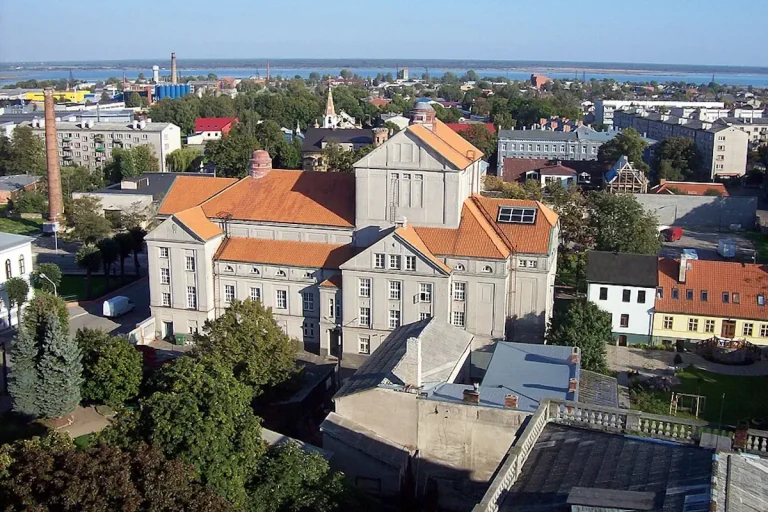
Liepāja is Latvia’s third city, on the Baltic coast, roughly equidistant between Riga and the Lithuanian border. It sits between the sea and Liepāja Lake — the lake is not incidental, it shapes the city’s geography, its transport routes, its sense of its own boundaries.
The city’s musical identity is older than the Latvian state. The Liepāja Symphony Orchestra was founded in 1881 — the oldest in the Baltics — at a time when the city was called Libau and was part of the Russian Empire, its cultural institutions largely run by a German-speaking merchant class.
Liepāja is also — and the locals will tell you this unprompted — Latvia’s rock capital. A disproportionate number of Latvian rock bands have come from here. The symphony orchestra and the rock tradition coexist without particular friction. Both are part of what the city actually is.
Where Europa Cantat Sits Inside a 500-Event Year
The European Capital of Culture designation is awarded by the European Commission for a single year. In 2027, the title is shared by two cities: Liepāja (Latvia) and Évora (Portugal) — not three; České Budějovice in the Czech Republic holds the title the following year, 2028. Liepāja’s programme, called (un)rest, runs from April to December 2027 across more than 500 events.
Visiting Liepāja for Europa Cantat
Europa Cantat runs 9–15 August 2027. August is high summer on the Baltic coast — the city’s busiest season. Anyone planning to attend should book accommodation early, and it’s worth booking a table if you want a proper sit-down meal — see where to eat in Liepāja.
Liepāja is three hours from Riga by road or bus — see getting to Liepāja for the full range of routes.