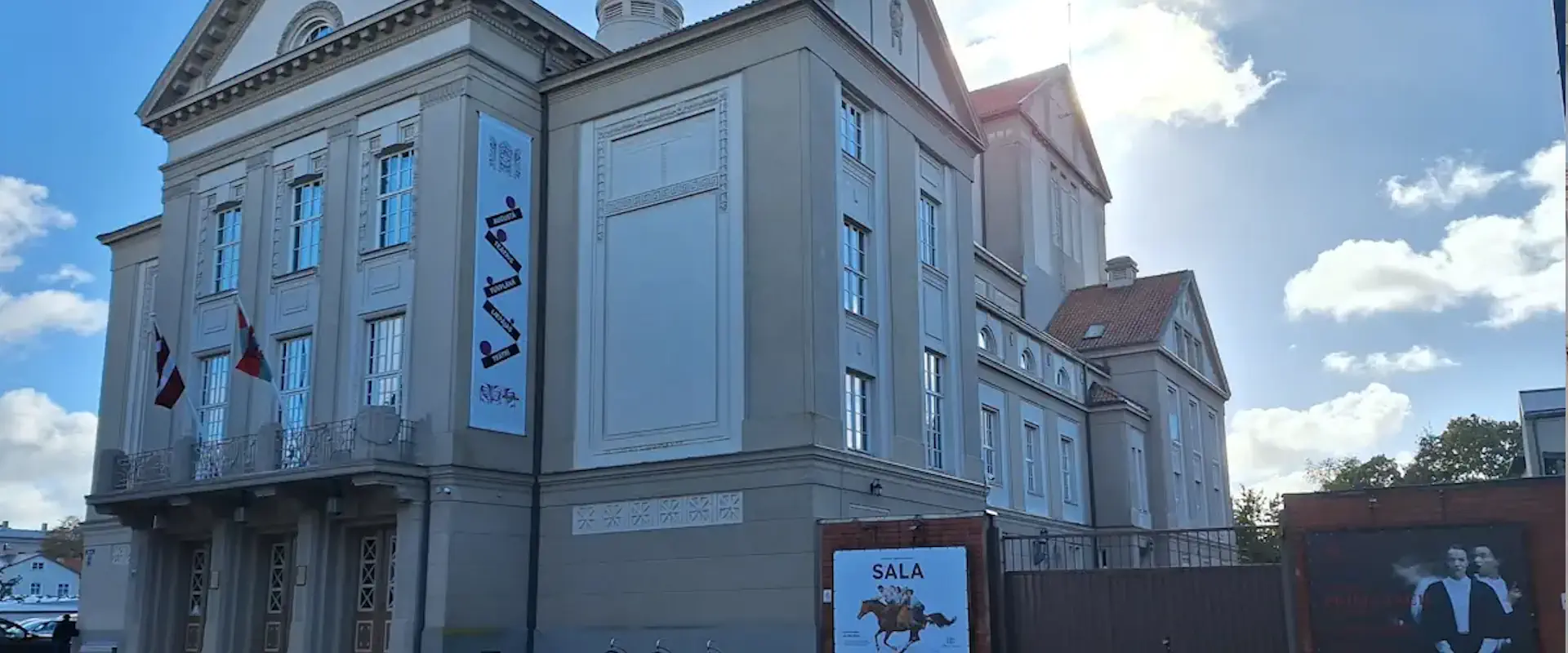

The Liepāja Theatre has been operating as a professional theatre in the same building since 1907. That makes it the oldest continuously functioning professional theatre in Latvia — a claim it holds by a significant margin.
Quick facts — Liepāja Theatre
- Founded: 1907 — oldest continuously operating professional theatre in Latvia
- Building: Art Nouveau, city centre
- Programme: Latvian-language drama, visiting productions, international collaborations
- Best for: Architecture and heritage interest, or timing a stay around a specific production
- Not ideal if: You need English-language performances — programming is mostly Latvian
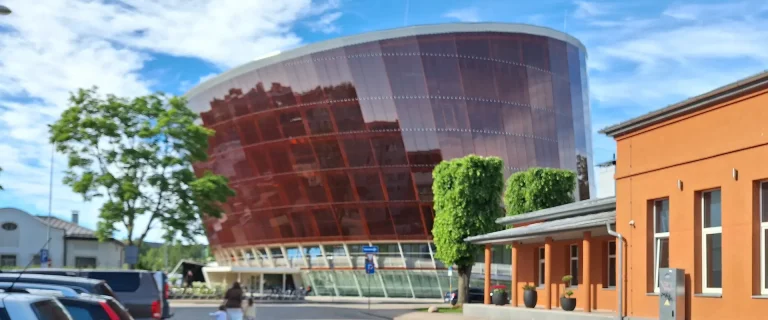
- Getting there: Historic city centre, walking distance from the Great Amber Concert Hall and Holy Trinity Cathedral
The building is Art Nouveau. The company has staged Latvian-language drama through two World Wars, Soviet occupation, independence, and now a European Capital of Culture year. Some institutions acquire their significance gradually. This one has had a lot to work with.
In this article
The Building: Art Nouveau in a City of Art Nouveau
Liepāja has more than 70 surviving Art Nouveau structures. Most are in residential or commercial use — apartment buildings, former merchant houses, the façades of streets in the historic centre. The theatre is the most publicly prominent of them.
The style arrived in Liepāja at the turn of the 20th century as the city was prospering through Baltic trade. Architects working in German, Russian, and Latvian traditions all contributed to the same streets in the same period, producing a built environment that carries the evidence of several cultural layers at once.
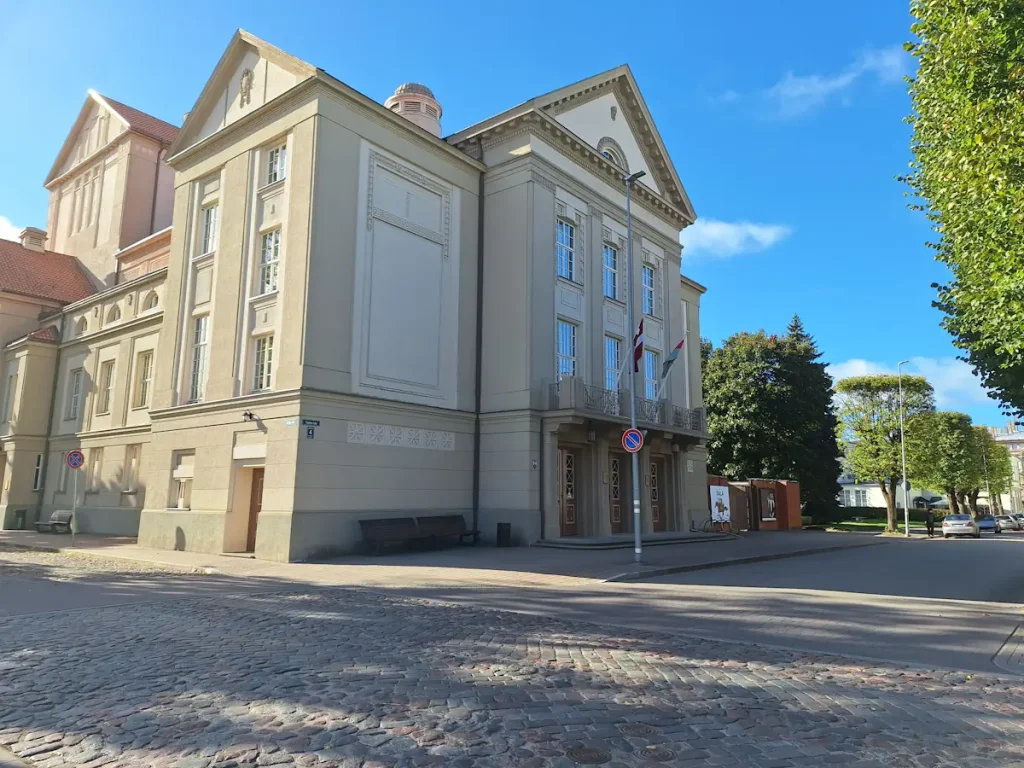
The theatre building retains its original staircases, decorative detailing, and the proportions of a space that was designed for performance — not adapted to it. That distinction is apparent from the moment you’re inside.
1907: Why This Date Matters
The Liepāja Theatre’s founding in 1907 places it at a specific moment in Latvian cultural history. Professional theatre in the Latvian language was, at this point, an assertion of national identity under Russian imperial governance — not simply an entertainment industry but a political fact.
The company survived the loss of Latvian independence in 1940, the German occupation of 1941–44, and fifty years of Soviet cultural administration. Latvian drama was subject to various restrictions and pressures throughout that period. The theatre kept programming.
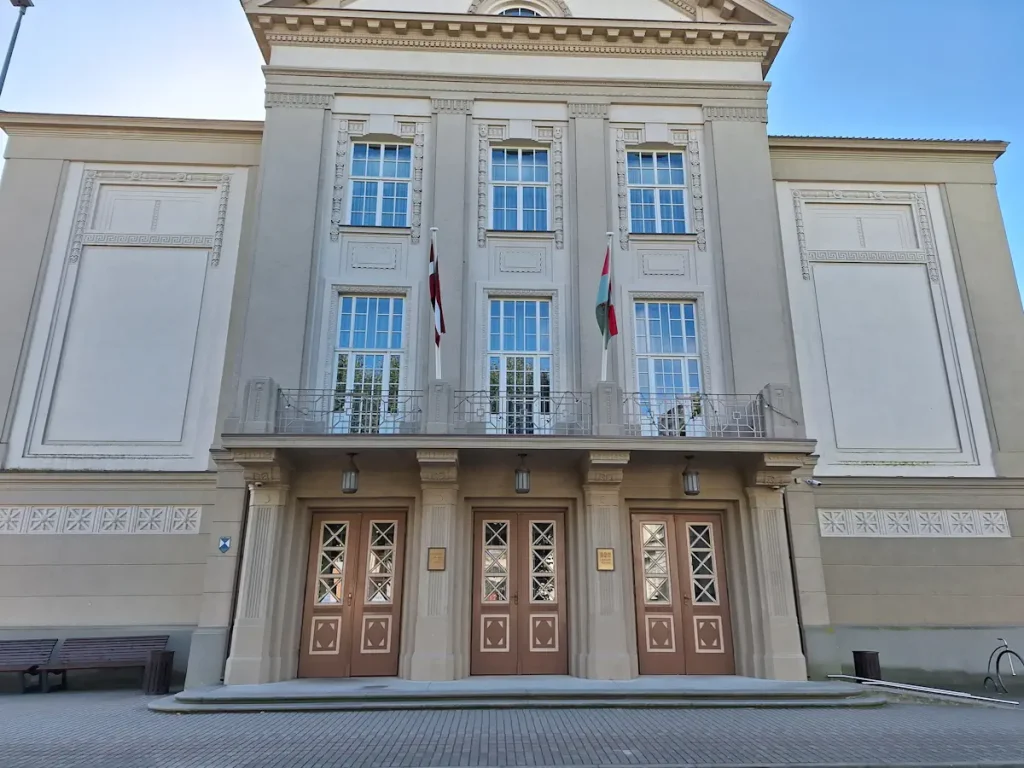
What this means now is that the institution carries genuine institutional memory — not a refounded organisation using a historic name, but the actual continuation of a company that has been making work in this building for 118 years.
The Liepāja Opera and What Came After
For part of the last century, the Liepāja Theatre building also housed the Liepāja Opera. Opera and drama shared a space, a stage, and a company structure that has since diverged. The opera moved on; the theatre remained.
The theatre now runs a full season of drama productions — Latvian-language work, visiting productions, and collaborations with international companies. Its repertoire covers the range a professional regional theatre typically covers: classic European drama, contemporary Latvian writing, work for younger audiences, and the occasional experimental commission.
It is also the institution behind the Experimental Stage at the Great Amber Concert Hall — the 120-seat space formally known as the Liepāja Theatre Small Hall. The company operates across both buildings, which gives it a reach that few regional theatres of equivalent size can claim.
The Theatre in the 2027 Programme
The Liepāja Theatre is part of the ECoC year’s framework, contributing to the drama programming of the (un)rest schedule. In a year that foregrounds Liepāja’s cultural infrastructure as the argument — that the city’s existing institutions are the story — the theatre’s age and continuity carry weight.
It is not the centrepiece of the year. In a city where the Great Amber Concert Hall and the Karosta military district attract most of the international attention, the Liepāja Theatre operates as something quieter — a working theatre in full season, not a heritage attraction on display.
That is probably the right position for an institution that has been doing the same job since 1907. The theatre doesn’t need the ECoC designation to justify itself. It has 118 years of continuous programming for that.
A City You Have to Commit To — Three Hours From Riga, No Airport
Liepāja is Latvia’s third-largest city, with around 70,000 residents on the Baltic coast. The Liepāja Theatre sits in the historic city centre, within walking distance of the Great Amber Concert Hall, Holy Trinity Cathedral, and the old port area.
The city is more than three hours from Riga by bus or car, which makes it a destination rather than a day trip. For visitors coming specifically for the theatre, timing a stay to coincide with a production is worth the planning.
The Theatre’s Place in a 500-Event ECoC Year
Liepāja holds the European Capital of Culture designation in 2027, alongside Évora in Portugal — the two cities share the title, not three; České Budějovice in the Czech Republic is the following year’s host, 2028. The (un)rest programme runs throughout the year with more than 500 events. Full listings at liepaja2027.lv.
Booking Around the Theatre’s Own Season
The Liepāja Theatre box office handles bookings for the theatre’s own season; tickets for wider ECoC programme events are listed at liepaja2027.lv. For accommodation and getting to Liepāja, the practical side is covered elsewhere on this site.